sotir

3852433f a661 45eb a781 a395b06fad14

How Search Engine Marketing Works

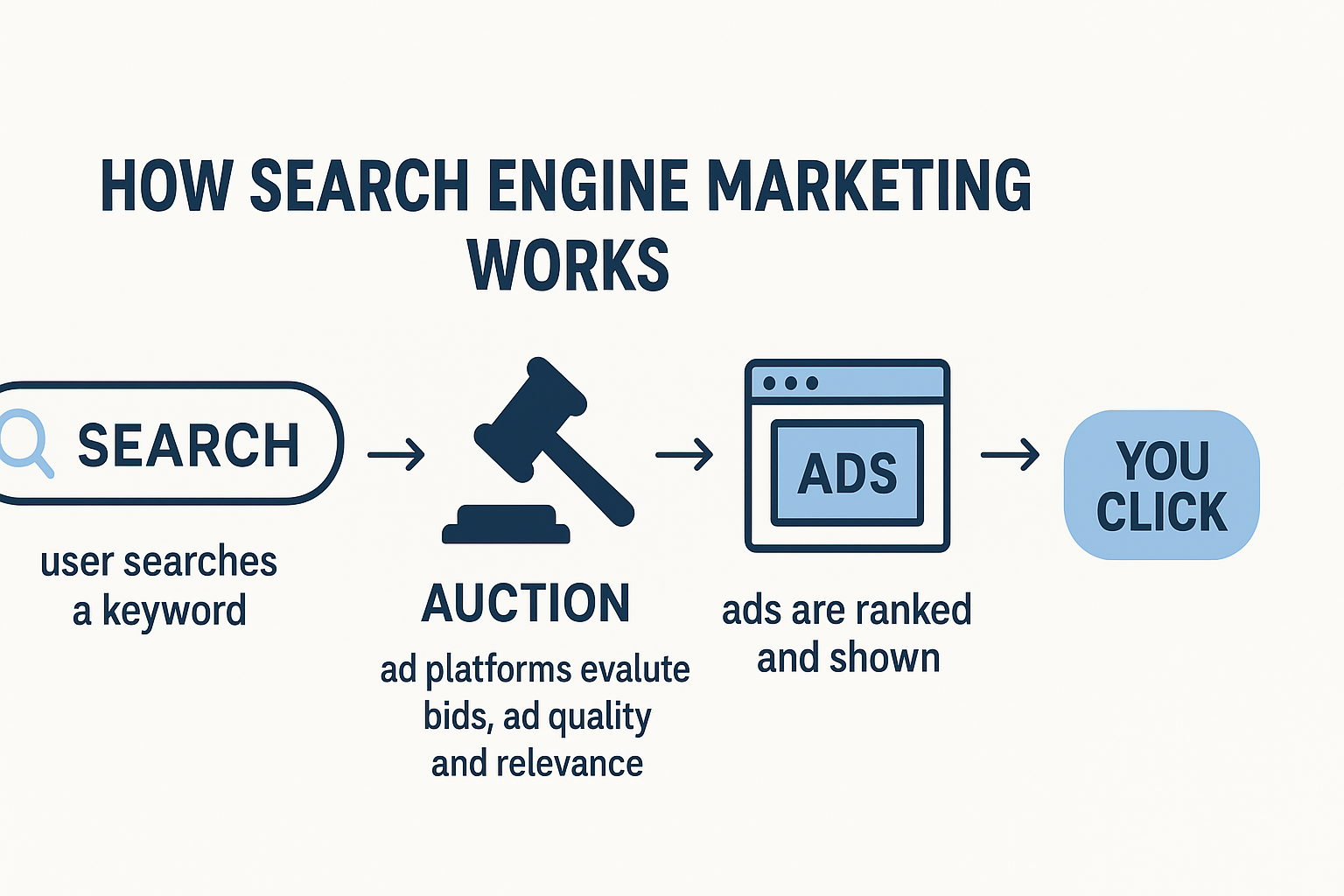
Search Engine Marketing (SEM) is one of the most effective strategies for engaging with potential customers right when they require your services, especially in a digitally dominated world with cutthroat visibility competition. Grabbing the attention of your audience—whether you are a new business trying to introduce a product to the market, or an established brand looking for new areas of growth—is possible with an understanding of how SEM operates and its strategies for providing a competitive edge in driving business growth and brand success. This guide will cover the specific and fundamental components of SEM, its various types of campaigns, and provide you with actionable insights for measuring your success. TL;DR SEM, or Search Engine Marketing in its full form, is a form of marketing paid for by the business to appear in the results of an online search. It entails advertising on Google and paying for targeted ads and keywords associated with the business. It is fast—PPC SEM is the fastest way to gain results and is best for capturing an audience with a high likelihood of conversion. SEM is a comprehensive service encapsulating search, display, video, app, shopping, and local service ads. What is Search Engine Marketing To promote a website, visibility in search results is one of the most critical areas of focus, and SEM is a widely adopted paid advertising model intended for this purpose. This model is intended to raise the visibility of a website in the Search Engine Results Pages (SERPs) with sponsored advertising. This is widely referred to as PPC (Pay-Per-Click) advertising because of its click-based payment model. While Search Engine Optimization (SEO) is focused on organic ranking, SEM provides immediate visibility through ads. That said, both strategies rely heavily on keyword targeting and user intent. How Does SEM Actually Work? At its core, SEM is built around auction-based advertising. Here’s a simplified breakdown of the process: You’re only charged when someone clicks on your ad. The two most influential factors in this auction are: The better your Quality Score is, the lower your costs and the higher your ad ranks—even if your bid is lower than a competitor’s. Types of SEM Campaigns SEM goes beyond just placing text ads on Google; let’s dissect the major types: 🔎 Search Ads Text-based ads Google places at the top and bottom of the search results pages. They help capture high-intent traffic and users searching for your product or service. 🖼️ Display Ads Visual banners placed on various sites within the Google Display Network (GDN). Perfect for building awareness and remarketing. 🛒 Shopping Ads Product-based ads showing images, prices, and links. Commonly used by eCommerce businesses. They appear on Google search results and on the Shopping tab. 🎥 Video Ads Appear on sites such as YouTube and can run before, during, or after videos. Great for storytelling and brand engagement. 📍 Local Service Ads For businesses with local operations. They appear above search results and show reviews, phone numbers, and operational details. 📱 App Promotion Ads Automated ads run on Google’s ecosystem (Search, Play Store, YouTube, etc.) to acquire app installs and users. Keyword Research & Campaign Structure An SEM project begins with well-planned keyword research. You must grasp the following aspects: High-intent and high-volume search phrases can be identified using Google Keyword Planner, Moz Keyword Explorer, and Google Trends. After conducting the research, the next step is account structure, which is done in Google Ads: This structure provides excellent control on targeting and spending the budget. How to Write Ads The best copy uses relevance, emotion, and a strong call to action. The ad’s description should respond to the search with a surefire solution, urgent value, and end with strong action words like “Get a Free Quote,” or “Book Today.” Ad extensions should also be used, since they increase ad visibility and offer further information such as location, phone number, and sitelinks. The Function of Landing Pages “Getting the click” is only part of the challenge. Capture users’ attention and ensure their experience is seamless and synchronized with the ad. Your landing page must: A strong landing page enhances conversion rates and boosts the Quality Score simultaneously. Why is SEM Important? Purchases starting with a search engine proportion over 89%. SEM promotes brands to users who are primed to engage. Additional Benefits: Measuring SEM Success You can’t improve something that you don’t track. Here’s what to monitor: Metric What It Tells You Impressions How often your ad is shown Clicks How often it is clicked CTR (Click-Through Rate) Clicks ÷ Impressions; measures relevance CPC (Cost Per Click) Average cost you pay per click Conversions Desired actions (purchases, signups, etc.) Conversion Rate Conversions ÷ Clicks Cost Per Conversion How much you’re spending per result Aligning SEM data with revenue and customer acquisition using Google Ads and Google Analytics makes measuring success far easier. SEM vs SEO: What’s the Difference? Feature SEO SEM Visibility Organic search Paid search Cost Time/resources Direct payment per click Speed Long-term strategy Instant results Control Influenced by algorithms Full control via campaigns Longevity Evergreen Ends when you stop paying Bottom line: SEO builds the foundation, and SEM delivers fast, measurable wins. The best digital strategies include both. FAQ: How Search Engine Marketing Works What is SEM in simple terms?SEM is the process of placing paid ads in the search results to drive traffic to your website. How is SEM different from SEO?While SEO earns exposure over time, SEM pays for it. How much does SEM cost?Costs differ by industry and location. Your budget is within your control, and you only pay when someone clicks. Which platforms support SEM?Google Ads is the most popular choice. Bing Ads and YouTube also support SEM campaigns. Can SEM work for small businesses?Yes. Even small businesses with limited budgets can benefit from SEM with local and niche targeting. How Zenith Point Can Help You Succeed with SEM At Zenith Point Digital Marketing, we develop specialized SEM campaigns to meet your business objectives. Our team handles everything

How Search Engine Marketing Works Read More »
How to Pick a Social Media Manager

These days, being on social media isn’t just nice to have; it’s basically the main highway for marketing. Whether you run a tiny nonprofit, a fresh startup, or a big-name company, the person steering those channels will shape how visible and trusted you seem online. With “social media expert” written on almost every resume, spotting a true pro can feel like looking for a needle in a digital haystack. Instead of guessing or picking the person with the shiniest personal feed, break the hiring process into clearly defined skills and traits. The right checklist helps you keep the hire smart, useful, and fully lined up with what your brand wants to achieve. TL;DR Look for solid platform know-how, sharp copy-and-image chops, and a proven knack for sneakily juggling customer questions all day. Don’t fall for age or follower counts-popularity doesn’t always pay the bills. Set firm KPIs, whip up hands-on questions for the interview, and watch the answers do the talking. If hiring feels heavy, agencies like Zenith Point Digital Marketing can either plug the right talent into your team or run the feeds themselves. Why Choosing the Right Social Media Manager Matters Picking the right social media manager is bigger than slapping an Instagram post on the feed. One pro can decide whether your brand sounds quirky, formal, or somewhere in between. That same person is often the first to reply to customer complaints, the strategist who dreams up seasonal campaigns, and the watchdog who spots bad press before it spreads. Money is part of the picture, too. A solid ad plan earns its keep by bringing fresh traffic and real sales; a half-hearted effort just burns dollars and leaves the company looking flat. Even a single misstep online can dent your reputation for years. Jumping in without the right guide, frankly, is risky business. What to Look For in a Social Media Manager 1. Platform Knowledge: Depth Over Breadth Good managers don t treat every site the same, and a one-size-fits-all plan usually falls flat. The person you hire should know why and how each platform matches your brand. Tip: Ask platform-specific questions during interviews to gauge their depth of knowledge. You ll spot surface-level answers right away. 2. ✍️ Solid Copywriting Skills Every tweet, post, or story is a chance to talk to people in your brand’s own voice. A smart social media manager knows how to write text that: Sloppy grammar or snooze-worthy sentences scare folks off. Tight, clear writing earns trust and keeps customers coming back. 3. 🎨 Basic Design Sense Goes a Long Way Most people running a feed aren,t full-time designers, but a decent eye for layout helps a ton. Strong design instincts let them: Familiarity with Canva, Photoshop, or the built-in tricks in Reels and Stories is a plus, not a chore. Good visuals and good copy pair like peanut butter and jelly. 4. 🤝 Customer Service on Display A brand’s social media page doubles as its public help desk. The person behind the keys must: Ask how they’d handle a cranky tweet; real-world examples beat hypothetical scenarios every time. 5. 🗂 Project Management Keeps the Lights On Planning a month of posts, running a paid campaign, then syncing with sales-everything depends on order and timing. Solid managers know: Creative flair matters, but so does the spreadsheet that proves a hunch right. 6. 🔄 Adaptability and Flexibility Social media runs around the clock, so your hire needs to keep pace without running on fumes. Nobody can stare at screens all night and still think straight. Before you seal the deal, ask how often they check alerts after quitting time and what personal rules they follow to recharge. You want a pro who jumps on a fire, not one who lives in a constant blaze. 🛠 Set Clear KPIs and Expectations Write down what winning looks like long before a single post goes live. Common yardsticks include weekly post counts, the speed of replies, and the simple yet telling rise in likes, shares, and new followers. A short clause in the contract can keep the spotlight off your manager-brand names stay quieter when no one knows who runs them. 🔍 Vetting Tips: How to Choose the Right Person Dig into their own feeds first: Are the captions clear or riddled with typos? Does their audience join the conversation? Real references beat glossy resumes. Ask past employers how the candidate handled a storm and what the numbers looked like afterward. If they brag about 100K followers, follow up with concrete wins. Strategy, not stature, keeps a brand on track. How Zenith Point Digital Marketing Can Help Zenith Point Digital Marketing has spent years watching social media win hearts (and wallets). Our crew understands what makes a digital community manager shine. Whether you want to train a new hire, audit what you already do, or hand off the whole thing to pros, we step in and handle several tasks you might find a little daunting on your own. 👉 Curious? Head over to our website, and lets supercharge your brands social presence today. FAQ: How to Pick the Right Social Media Manager? Q: What’s the one skill a social media manager must have? A: No single skill rules them all, but solid copywriting paired with nerves of steel in customer-service storms usually wins out. Q: Should I build an in-house team or hire an agency? A: If payroll is comfy and you love campus culture, keep it local. If you want expert flair without the HR paperwork, passing the reins feels smarter. Q: Do social media pros really go home at 5 p.m.? A: Most should be ready to match the internet’s sleepless clock, answering burning mentions before coffee goes cold. Q: How do I know if a candidate really understands social media?A: Ask the applicant to pull up real numbers from their past projects and talk through how they adapted their game plan for Twitter, TikTok, or whatever platform was in play. Probe

How to Pick a Social Media Manager Read More »

9c13deb8 7e29 431f 9909 63f3b4a6e65c

How to Keep SEO-Ready Content Coming and Coming

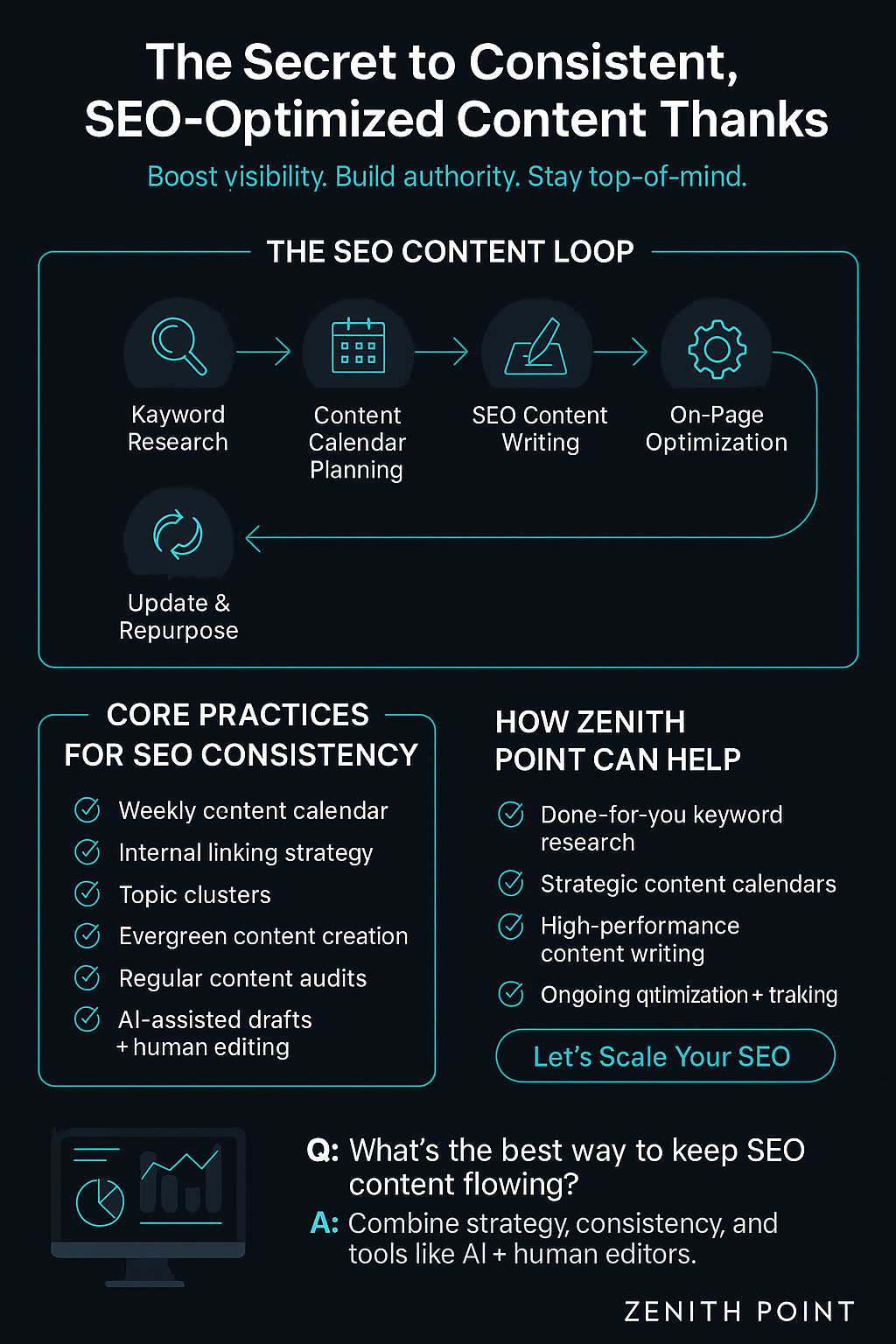
Winning at SEO isnt a sprint; its a long, winding marathon. Websites that win keep launching fresh, search-friendly articles while everyone else runs out of steam. That constant drip of good material is exactly what search engines crave, and what curious readers stumble upon. People often ask me how to pull that off week after week. I lean on Brian Deans advice and say make a system, not a pushy brainstorm that burns you out in January. Put the system in place and the ideas will find you. Quick Recap If you want the 30-second answer, here it is: Find the right keyword, check whos ranking for it, figure out why that page clicks. Make something richer than what they wrote, fine-tune your headlines and tags, then loop back and update the post once it settles. Oh, and build a few links so Google believes you. Do all that on repeat, and traffic will keep knocking at your door. Why Bother with Fresh SEO Content? Fresh, fine-tuned posts get you: Skip the routine, and you hand all of those wins to the competition. Step 1: Dig Into Targeted Keyword Research Real SEO begins with the search box, not your product roadmap. Pick a few key phrases that strangers are already typing, not clever slang your team invented. Use a mix of free tools like Ubersuggest or paid suites like Ahrefs, but let user demand steer your choices. If no one is looking, no article can save it. You could paste the entire post into a blank doc, but I hope this shows why I write in bullet points. Honest updates, tidy lists, and bold headers save everyone a few extra clicks. Find Keyword GoldFire up Google Suggest, Semrush, or Ubersuggest and see what real people type into their search bars. Grab a blend of loud, high-volume terms and quieter long-tail phrases; the smaller ones are usually friendlier when it comes to ranking. 🛠 Action Tip: Every month, pencil 10 to 15 fresh keywords onto a spreadsheet. That list becomes your content diet for the next few weeks. Study the SERPsType your main keyword into Google and scan the first ten results like a detective. Do you see how-to posts everywhere, or are there lots of listicles and opinion pieces? Note the common threads. Whatever format shows up most often is probably the template Google already trusts. 🛠 Action Tip: Jot down the winning pattern so you can mimic the style and still deliver your own spin. Size Up the CompetitionOpen Semrush’s Domain Overview tool, plug in your URL, and watch the scorecard light up. Look for the shared keywords, the traffic estimates, and the articles driving the most clicks. Protect that intel like a secret recipe. Keep a swipe file of headlines, topics, and structures that appear to pull the biggest crowds. Go Bigger or Go DifferentCrush the ordinary by following the Skyscraper Technique-make your piece ten times better, richer, or longer. If that sounds rote, flip the script and try something nobody else has dared to tackle. The goal is simple: leave your visitor saying, Wow, I never saw that coming.** Youve read the top-ten SEO lists a hundred times. Now try something fresher-the ultimate guide to SEO in 2025. 【Quick Win】 Include one-of-a-kind research, eye-catching graphics, or deep-dive explanations so your piece isn’t just noise. 5. Dangle a Hook for Easy Links A hook is that irresistible reason people share and cite your page. It might be fresh numbers, a master handbook, or a sharp infographic. When a hook is present, earning backlinks becomes almost automatic, and those links remain one of Googles loudest signals. 【Quick Win】 Browse your industrys most-linked content, note its angle, and let that shape your next post. 6. Nail On-Page SEO Follow these tidy on-page habits and watch your rankings perk up. Internal Linking Broadcast new articles by linking to them from your strongest pages. That little push goes a long way. Short Keyword-Rich URLs Mint URLs that say what the page is about, and do it in fewer than six words. Brief and clear beats clunky every time. Semantic SEO Sprinkle terms Google associates with your topic-words that pop up in the People also search for panel. They add context that helps you rank. 【Quick Win】 Scan older posts monthly and refresh the internal links so every piece continues to pull its weight. 7. Match Search Intent Perfectly Take a minute to figure out what a visitor really wants. Are they hoping for a step-by-step guide, a shiny product review, or maybe a side-by-side comparison? That exact shift once let Brian Dean swap a dry process post for a punchy list, and boom-his traffic shot up 70 percent overnight. Action Tip: Peek at the top results. Mimic the format that already works, then polish it until it shines. 8. Invest in Content Design People stick around longer and share more when content looks good on the eyes. Pretty pages also attract those precious backlinks. Use: Action Tip: Grab Canva for quick edits, or hire a budget-friendly freelancer who speaks design lingo. 9. Build Backlinks Actively Links still power SEO, so chase them like theyre the finishing kick in a race. Here are three solid tactics: Broken Link Building Surf through other blogs, spot dead links, and offer your post as the perfect replacement. Competitor Link Research Stalk where rival sites earn their links, then pitch the same sources with your better story. Evangelist Method Shoot a friendly email to folks who tweeted or linked similar pieces, drop a line about your article, and see if they naturally share it. Action Tip: Make it a monthly habit to bag 5 to 10 strong links-inbound momentum builds when you chip away consistently. 10. Refresh and Update Existing Content Google has a soft spot for anything that looks brand-new. Give your articles a facelift by swapping in fresh: Brian Dean once bumped a single post’s traffic by 62% just by re-launching it with newer

How to Keep SEO-Ready Content Coming and Coming Read More »

Yes-to-SEO-content

SEO-Optimised Content: Is It Even Worth It?

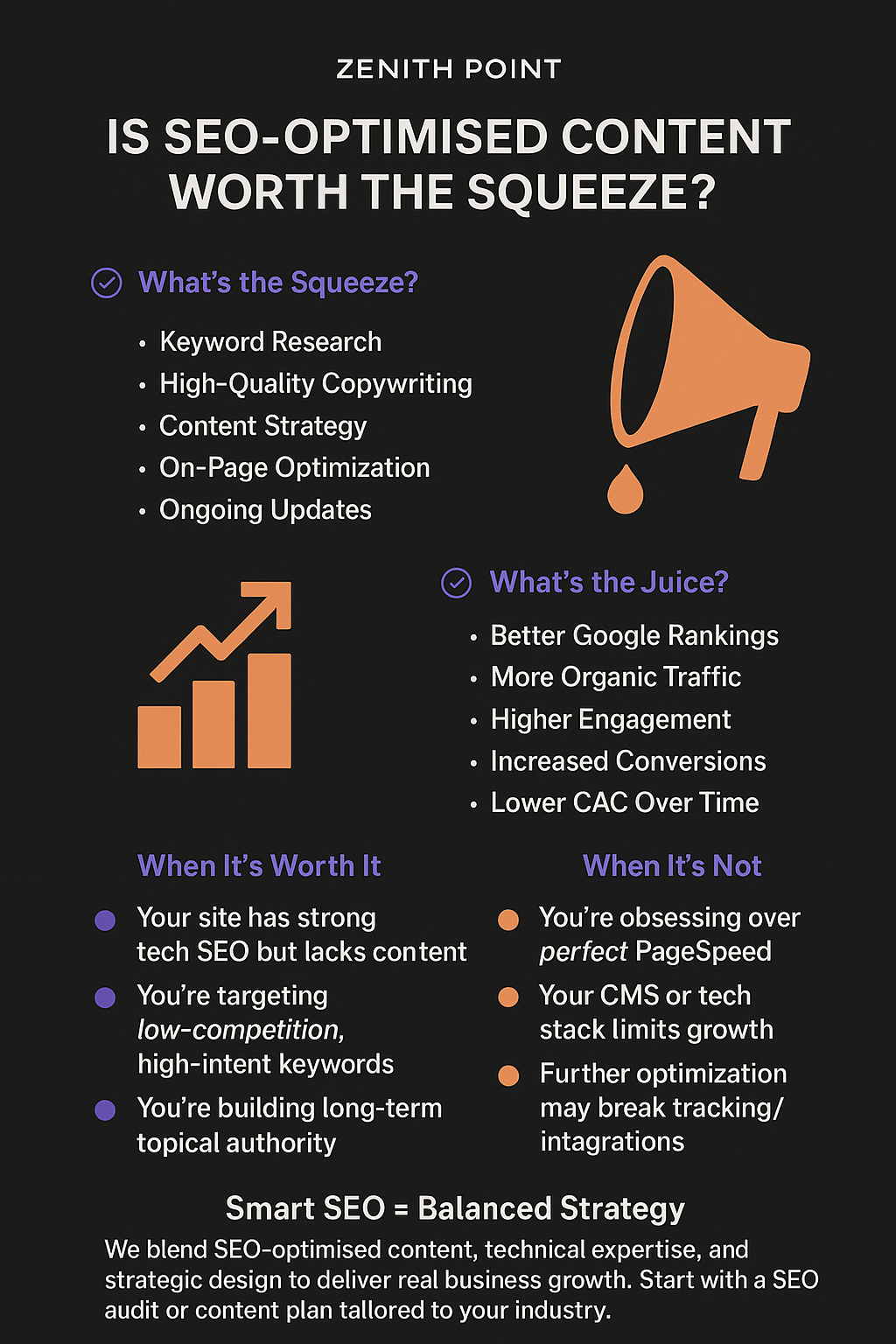
Short answer: Absolutely, but only if you handle the squeeze the right way. Quick Take Putting your articles through the SEO filtering process is still a smart move. When you prioritize usefulness, plan strategically, and keep everything in balance, the payoff shows up. Wild keyword stuffing and a panic over pixel-perfect PageSpeed numbers wont hold water over the long haul. If you want steady rankings, better conversions, and a site that actually pulls its weight for your brand, stick around. What Is SEO-Optimised Content, Anyway? SEO-optimised content is writing thats been tuned to appear in search results because it matches what real human beings are typing into that little query box. Getting there usually means: The kicker? All those technical gears are pointless if the reader doesnt feel they gained something meaningful the instant they land on your page. Is the Juice Worth the Squeeze? Marketers love to ask this, and the reply is a firm yes-on one condition: you squeeze the right fruit. Rushing headlong into tactics without a map simply wastes time. Stop Obsessing Over PageSpeed First Speed is important-dont let anyone tell you otherwise-yet it isnt the only trophy on the shelf. Balance it with content mastery, clear intent, and a pleasant user experience. When that mix is right, visitors stick around, and, yes, your load times still shrink. Google has pretty much dropped the mic on speed. When every other box is checked, a zippy load time tips the odds in your favor. Huy Nguyen, a speed junkie over at Uplancer, likes to say that PageSpeed is the tie-breaker. Its a heavyweight claim, so Google must mean it. Mobile-first indexing makes the case even sharper. If the site drags on a phone, visitors bounce before they even notice your dazzling blog posts. Once the usual tricks are in place-compressing images, kicking in lazy load, wiring up a CDN, tightening the cache-cease the score-chasing. Chasing a perfect Lighthouse number can be a rabbit hole that eats up more time than it saves. Now flip the question: Does your page deliver honest-to-goodness value? Speed scores mean squat if the content leaves the reader empty-handed. 2Content Is Still King-and Queen, Bishop, and Knight Quality content is where your ROI will warm its hands. Well-researched, search-intent writing still sits at the head of the table. Think of it in layers: a how-to that teaches without talking down, a product spec that nudges shoppers to hit buy, maybe even a video or infographic that earns a bookmark. Add digestible dictionaries and glossaries for good measure. The longer visitors linger, the harder they bond with your brand. Tools like Ahrefs, SEMrush, or Moz will point you to low-competition keywords no one else has pounced on. Build a topical hub around those phrases to signal authority to both Google and curious readers. Action tip: Before fingers hit keys, ask yourself the blunt question. What keeps the audience awake at night, and how can you answer it with more clarity than any competitor? 3 Know When to Stop Squeezing Not every speed tweak is worth the headache it brings. If the next round of optimization breaks analytics, strips chat bubbles, or throttles your ad tracking, hit pause. That kind of improvement is a diminishing return tacked right to the projects forehead. Sometimes, a reliable site that loads fairly quick and answers real questions is more than good enough. Nguyen once warned that tweaking too much can snap critical web tools right in half. Suddenly, the grand SEO plan you had looks more like a jigsaw puzzle missing half the pieces. Instead of chasing speed minutes, think about refreshing old posts, sparking up user experience, or rolling out shiny pages aimed at fresh, high-value keywords. Balance Speed, UX, and Strategy A site that zips along but barely says anything? Search engines shrug. Great articles that drag their feet? Visitors hit back before the first paragraph. A pretty homepage with zero SEO? Crickets. The sweet spot sits at: SEO-Optimized Content FAQs Is content more important than PageSpeed for SEO? Definitely. Speed is only one notch on the ranking ruler, while sharp content that meets visitor needs takes center stage. What type of SEO content should I create first? Kick off with blog entries focused on long-tail, low-competition keywords. Theyre easier to rank, draw in links, and quietly build your sites cred. How can I tell if my content strategy is working? Keep an eye on page views, bounce rates, time on site, conversion numbers, and where each URL lands in the SERPs. Toss in regular SEO audits to stay honest about what clicks and what flops. When Should I Stop Page-Speed Tweaks? Keep crunching milliseconds until the shortcuts start breaking stuff. If your analytics dashboard stops tracking or the shopping cart goes wobbly, hit pause. After that, pour energy into fresh content and a smoother user journey. Speed is important, but it shouldnt hog the entire stage. How Zenith Point Digital Marketing Can Help Zenith Point doesnt settle for the low-hanging SEO fruit. Our crew stitches technical tweaks, punchy copy, and eye-catching design into one strong strategy. The goal? Every tweak, text block, and button gets your website a little closer to turning random visitors into real leads. Final Thoughts Sprinting for perfect speed is tempting, yet it rarely pays off. SEO is a marathon, not a hundred-yard dash. Balance loading time, readable copy, bold design, and plain old usability if you want the squeeze to matter. In the end, the juice is absolutely worth it.

SEO-Optimised Content: Is It Even Worth It? Read More »

Socialmediaorlose

Maintain Your Social Media or Lose!

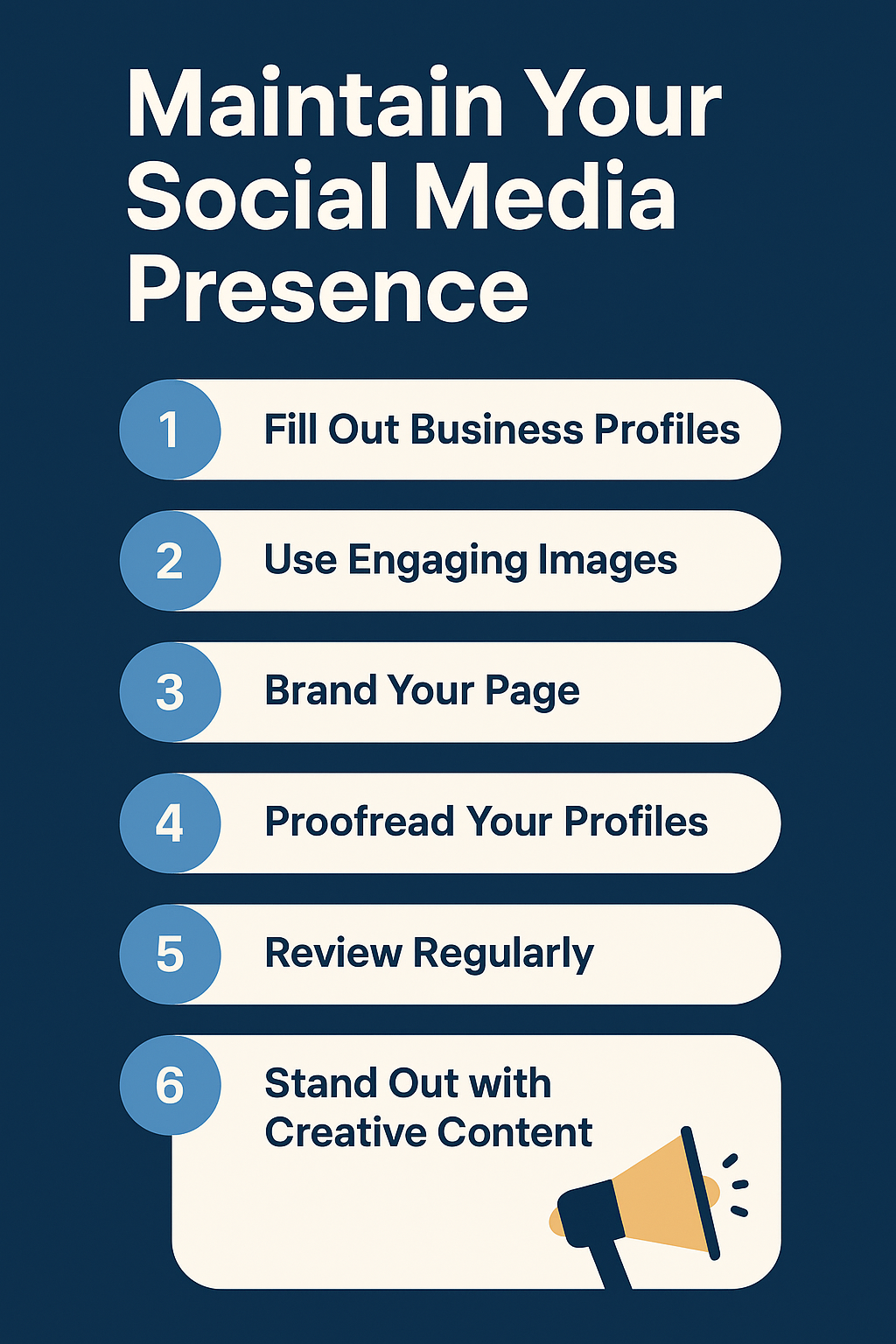
Why Your Online Presence is Tied to Your Survival in the Digital Age If you stop talking to your audience, they will forget you. Lock the front door to your store; the digital world moves on to the next shiny thing. Social media keeps the door wide open. Explore why social media accounts for SEO juice and brand trust. Gaps in activity drain attention, link love, and web traffic. Emerging evidence shows steady posts nudge algorithms the right way. Neglect social channels long enough, and competitors will fill the silence. Zenith Point Digital Marketing is ready to work, keeping your name buzzing, ranking, and remembered long after the next viral fad fades. Introduction: The Harsh Reality Today, skipping social media is basically signing your brand’s death warrant. Think beyond polls or pumpkin-spice memes; those clicks count. Solid profiles double as customer service desks, reputation shields, and traffic highways. Without fresh content, SEO tools treat your site like a ghost town. Active feeds tell Google you’re open for business every hour. From a garage startup to a boardroom full of Fortune 500 executives, one lesson echoes: ignore social media and SEO at your peril. The two fields tug at each other and leave you off balance if you pretend they dont exist together. The SEO Connection-Correlation or Causation? Do social headlines actually nudge your site up the rankings? That question bounces around boardrooms and marketing slack chats alike. Google has never pulled back the curtain to say yes, yet studies keep popping up that hint even the search giant can feel the social buzz. A post that lives in news feeds usually catches more eyes than one that collects dust on a lonely server. How Social Media Fuels Your SEO-Even If Its Indirect Google likes a crowded room. If your article is shared, liked, and talked about, the algorithm notices. Extra visitors often turn into real, biomechanical humans banging on your URL and exploding the immediate traffic log. That surge whispers to the algorithm that your page might mean something. Timing matters. A split-second tweet can drift into the hands of a busy reporter or a niche blogger scanning feeds for fresh material. When they decide to cite or link to you, that backlink-folded into a .edu or .gov site, for example-hops onto the ranking checklist almost by stealth. A single thoughtful share can spiral into several of those powerful links, and nobody even saw it coming. So, while social posts may not flip the ranking switch directly, they sure lay out a treasure map for Google bots that are already hungry for good content. Traffic that arrives because a real person clicked a link matters. Facebook, LinkedIn, Twitter-each boost your credibility the minute the click lands. Search engines notice lively referrals, not quiet theory. Look up almost any big brand, and its Facebook, LinkedIn, or YouTube page will pop up first. That dominance makes clean profiles vital for reputation management. An old or half-dead account ends up on display before the companys own website. Why SEO and Social Media Must Talk Separating SEO from social media is like trying to steer a boat with one oar. Joined forces stretch reach, improve search visibility, and help shape brand buzz. Ignoring social channels quietly surrenders the traffic war. Quick Tasks to Treat Social Accounts Like Essential Employees Claim every handle you can find-Facebook, LinkedIn, Instagram, YouTube, Pinterest, and Twitter. Even dormant pages act as protective bookmarks for the brand name you own. ✅ Post Regularly Showing up is half the battle. Line up a few date blocks on a content calendar, pick whatever works, and stay glued to those dates. Even a friendly 2 or 3 posts each week reminds followers that you exist. ✅ Engage With Your Audience Leave the crickets behind by replying to comments and those random D.M.s. Every quick answer increases your odds of appearing in someone elses feed the next day. ✅ Share High-Value Content Drop blogs, how-to videos, or even a colorful infographic that solves a problem instead of creating one. People pass that stuff around, and a share can land you a fresh backlink. ✅ Use Tools to Monitor and Measure Dive into Searchmetrics, Google Analytics, or any similar dashboard that pleases your data-loving heart. Numbers reveal who clicked what, letting you smooth out your SEO and social playbook in a hurry. FAQ: Maintain Your Social Media or Die! Q: Does social media directly affect SEO?A: Not in the nitty-gritty code, but the side effects are huge. More clicks and more eyes usually mean fresh links landing in your lap. Q: How often should I post on social media?A: Shoot for at least 2 or 3 times weekly. Steady relevance beats dumping ten posts on your audience in a single day. Q: Which platforms matter most for SEO?A: Facebook, Twitter, LinkedIn, and good ol YouTube usually get friendly with Googles search results, so those are the ones to watch. Q: Can I really hand off my social media accounts? A: For sure-you totally can. Handing that task to someone else usually saves time, so long as that person or team gets how social posts link back to your SEO goals. How Zenith Point Digital Marketing Steps In Zenith Point specializes in weaving SEO with social media so the two engines push your brand forward together. We draft original posts, set daily schedules, and mine audience data to keep your website climbing the search ranks. Brands that start slow or those that look dusty online find their voice again with us. Staying silent online invites competitors to steal the spotlight. Defend your turf before another brand beats you to the punch. Final Thoughts The internet punishes brands that stall; yesterday’s tricks are today?s ghosts. Ignoring social media may feel safe for the budget, yet the real risk is being invisible to customers. Drop a post for too long and your name fades. Keep the feed fresh or watch your profile picture gather dust. The choice

Maintain Your Social Media or Lose! Read More »

OnapgeSEO

On Page SEO, The Beginning and End of Your Success

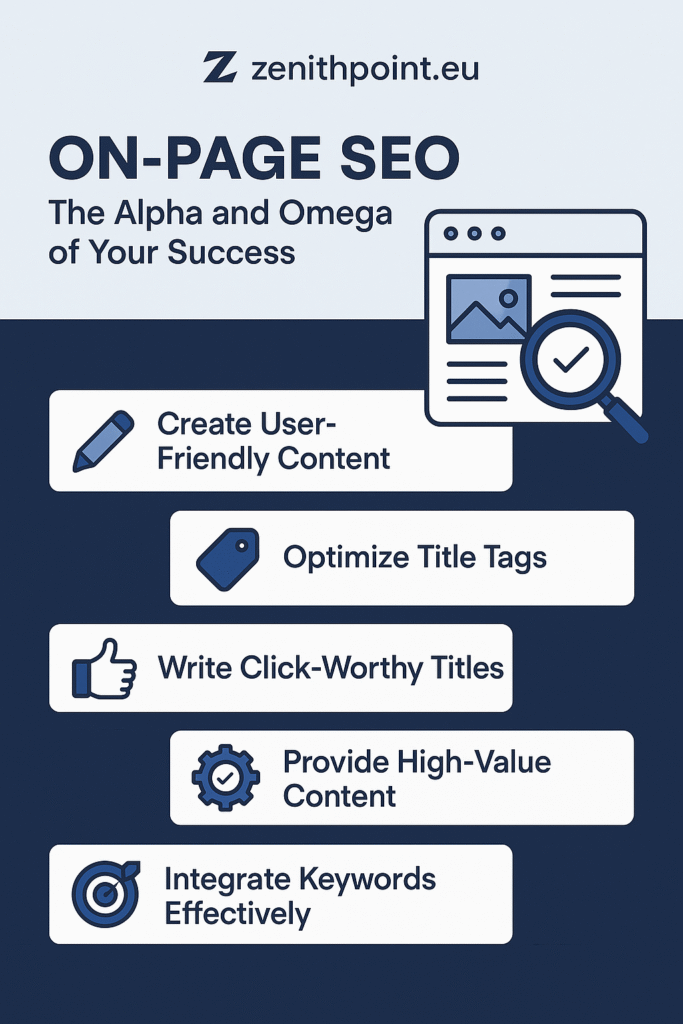
TL;DR On page strategies complete the circle for successful digital marketing endeavors. Optimizing content and managing headers, creating internal links to enhance interaction, building interest, and employing meta tags, plus improving the overall experience are steps vital for communication with visitors and search engines. If on page strategies are done properly, the rewards include sustained organic traffic growth, improved rankings, and a return on investment far exceeding what is spent on paid advertising. Introduction Securing high ranks in google search results is not just a bonus, but a requirement for businesses and companies, especially given the world we live in today. In fact, businesses receiving attention on the first page of google results have a considerable edge, capturing nearly a third of search traffic with the #1 result. Achieving this is possible through effective on-page strategies. Despite being overshadowed by the social media hype or ad spending, on page SEO strategies still remains the be-all-end-all for attaining success in online marketing. With on-page SEO, marketers not only get the technical aspects, but also content and user experience bringing everything together on web pages, making them appealing for search engines and users alike. Let us discuss more ways to improve on page strategies to help enhance your website and turn it into a lead and conversion machine. What Is On-Page SEO? On-page (or on-site) SEO is the practice of optimizing specific web pages in order to improve their position in search engine results. It incorporates content optimization, HTML tags, which include title, meta and header tags, images, internal links, and page speed. With on-page SEO, you have full control over how your website communicates its value within its content because it is completely separate from off-page SEO, which focuses on backlinks and other external signals. Why On-Page SEO is the Backbone of Digital Success 1. Enhances User Experience Search engines like Google reward websites that provide a well-structured, useful experience with better visibility in search results. On-page elements like mobile-friendly design and content alongside loading speed impact user experience. 2. Improves Visibility in Search Results Having your title tags, meta descriptions, and headers correctly optimized significantly improves your chances for visibility. Their relevance for your page is checked by search engines and evaluated alongside the other on-page elements. 3. Targets the Right Audience Your content will appeal to the desired audience if you create it around a relevant keyword or phrase, as well as a long-tail version. It also allows for geotargeting to drive local traffic. 4. Works 24/7 An optimized web page transforms into a digital sales representative, guiding users and converting potential customers even when offline. 5. It Generates Long-Term ROI In contrast to paid ads that halt traffic once you stop funding them, well-executed on-page SEO continues to generate traffic in a cost-effective manner long after you invest. Key On-Page SEO Elements You Can’t Ignore Title Tag Optimization Users and search engines greeting your site will greet it with your title tag. Ensure you incorporate your target keyword, make it enticing, and keep it under 60 characters. Meta Descriptions Although not directly impacting rankings, click through rate can be boosted with an effective description. Use a persuasive summary within 155-160 characters with a clear but powerful call to action. Headers and Content Structure Your title should be in H1, with H2s and H3s logically dividing your content to form a hierarchy. This benefits both users and search engines. Keyword Placement Deviation from balance between primary and secondary keywords throughout content is known as keyword stuffing. Remember to include keywords in headings, the first 100 words, and the body of the text. Internal and External Links Don’t be shy to link to other relevant pages within your site. This will both keep users engaged and enhance crawlability. Links to authoritative sources will build external credibility. Image Optimization Include appropriate keywords in title, compress images for faster load time, and use alt text to describe the image. E-E-A-T Principles Every piece of content must showcase Experience, Expertise, Authoritativeness, and Trustworthiness. This is especially important in YMYL (Your Money or Your Life) niches like health and finance. Content Audits and Updates Content that your audience engages with should be reviewed periodically and updated to boost accuracy and relevance to current trends. Failing to do so can result in publishing outdated content that could damage your rankings and reputation. FAQ: On Page SEO, the Alpha and Omega of Your Success What is on page SEO? On page SEO focuses on improving aspects of your website that you have control over to rank higher on search engines and receive organic traffic. How is it different from off page SEO? Off page SEO targets external signals such as backlinks and social media influence. On page SEO refers to everything that you can control and manage on your website. Why is on-page SEO important? It assists search engines in understanding the content and its context on your website, thus helping in ranking the site for relevant searches. How frequently should I audit my on-page SEO? At least once every three months. Algorithms put in place by search engines and users shift frequently, and regular audits will keep you in the competition. Can on-page SEO get me to page one all by itself? Having a strong on-page SEO strategy is fundamental to enhancing rankings, but it isn’t the entire solution. Pair it with quality backlinks, good UX, and relevant content marketing for best results. How Zenith Point Can Help At Zenith Point Digital Marketing, we help brands take ownership of their line of business with the help of on-page SEO. We perform comprehensive audits followed by content optimization as well as metadata tagging and linking of your site structure to industry standards. With us, you no longer need to worry about Google’s algorithm changes because we do. Visit us today and let us help you optimize your site and convert it to a traffic boosting and lead generating software. Final Thoughts As much as they

On Page SEO, The Beginning and End of Your Success Read More »

72a820c4 8ef3 4557 bbe2 61814824d874

GEO and How to Prepare for It

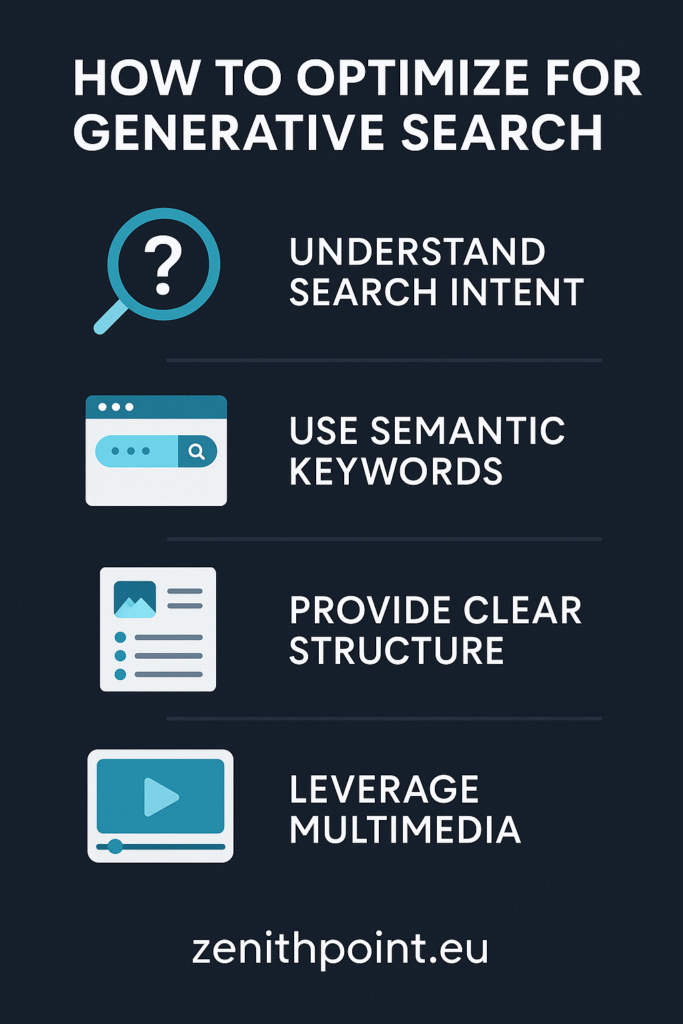
Generative Engine Optimization, or GEO, is quietly changing how people find stuff online. If you want your pages to show up, getting ready for GEO isn’t optional anymore. TL;DR GEO pushes you to tune web copy for AI-driven search faces instead of just humans. It zeros in on context, intent, layout, and visuals. Here’s a quick checklist: What Is Generative Engine Optimization (GEO)? Put simply, GEO tweaks content so AI-powered engines like Google’s Search Generative Experience can make sense of it all at once, not in little keyword bites. Traditional SEO leans on exact-match words and link counts, but GEO flips that script by eyeing: Why GEO Matters Right Now Generative searches are popping up everywhere, and they don’t wait for your site to catch up. Most users are asking questions in a chatty tone and expect instant, relevant replies. If your posts still cling to 2015’s keyword checklist, you may live on page 2 forever—even if you once ruled the top spots. How to Prepare for GEO Keyword Research for Generative Engines Successful GEO work begins with in-depth semantic keyword research. Numbers matter, sure, but search engines also want to understand the story behind those numbers. If you prefer fewer headaches, try a tool like LowFruits; it surfaces low-competition phrases that other services often miss. Semrush and Ahrefs both let you test keyword difficulty and dive into user intent. For simple trend spotting, the old-school Google Keyword Planner still gets the job done. While you’re gathering data, pay special attention to search intent, long-tail phrases, and natural-sounding questions. Think in topic clusters instead of listing one-off terms. Structure Content for AI and Humans Generative engines reward material that is organized and easy to follow. A clear layout helps both bots and real-life readers enjoy the ride. Start with descriptive headings—H2s, H3s, even chunky H4s—and stick to tight, understandable paragraphs. Sprinkle in bullet points, tables, and numbered lists whenever you can. The goal is instant clarity. Take a minute to line up product perks in a quick table instead of cramming them into a dense block of text. AIOSEO’s TruSEO Score can double-check whether your setup meets the latest best-practice benchmarks. Don’t Skip Technical GEO Prioritize Page Speed Visitors click away if your pages crawl. A zippy load time nudges search spots up. Crawlability Matters Sleek internal links and tidy sitemaps keep bots happy and searching everywhere they should. Schema Markup Helps Think of structured data as a neon sign that explains your site to AI. Use a checklist—something like AIOSEO—to spot crawl hiccups and check health numbers monthly. Leverage Multimedia Text Isn’t Alone Search engines are now tuning into videos, infographics, and even headshots. Why This Works Rich media keeps eyeballs glued, pads time on page, and hands the algorithm more clues about context. Quick Win A bite-sized video walkthrough or a colorful chart can flip a plain entry into must-see content. Build Authoritative Content Expertise Pays Off Google still smiles on pieces that show real experience and trustworthiness. Solid Tricks Link to well-known sources, sprinkle fresh stats, snag a pro quote, and tag all claims with proper citations. Following this routine echoes E-E-A-T principles—Experience, Expertise, Authority, Trust. Use AI Tools to Scale — But Add the Human Touch Helpful Bots ChatGPT can sketch outlines, Copy.ai can spit out drafts, and both save hours. Final Rule Always polish what machines churn out; a dash of human flair decides whether readers stay or leave. 📊 Track Your GEO Performance Measuring how well your Generative Engine Optimization (GEO) efforts are paying off gives you the edge. If you’re running a WordPress site, the AIOSEO Search Statistics palette lays everything out in easy-to-read graphs. Most site owners can pick it up in a couple of clicks. What to Monitor: When you spot weak spots, breathe fresh life into the lagging pieces and pour extra energy into the golden ones. FAQs About GEO and How to Prepare ❓ What is Generative Engine Optimization? GEO lets you tune your writing for AI-led search pages that care more about context and reader intent than simple keyword counts. ❓ Is GEO replacing traditional SEO? Not at all. While traditional SEO is still in the game, GEO slips onto the field as its clever teammate. ❓ What’s the biggest difference between SEO and GEO? SEO leans on links and frequency of phrases; GEO talks structure, clarity, photos, videos, voice answers—you name it—and centers on what a reader really wants. ❓ How do I start implementing GEO? Kick off with a round of semantic keyword digging, break your headings into neat buckets, sprinkle in charts or images where they fit, and keep the technical corners of your site tidy. Then check your dashboards often, because numbers never lie. Why Zenith Point Matters Zenith Point Digital Marketing lives and breathes SEO. We also dive deep into Generative Engine Optimization, a newer play still flying under many business radars. Our crew crafts search-ready content that speaks both to human eyes and the code running next-generation search features. The payoff? Your brand pops up in AI-driven results, not just the familiar blue-link maze. Maybe you’re launching a site today, or you’re chasing a full GEO remix of an aging domain. Either way, we’ve packed the know-how, the gear, and the game plan to help you stand tall in an ever-shifting online world.

GEO and How to Prepare for It Read More »

d3173d23 ae10 4a76 bdf8 c616ea59ce04

You Can’t Kick Off Marketing Without First Fixing the Nuts and Bolts of Your Site. Here’s Why It Matters.

TL;DR. Pumping money into ads, firing off blog posts, or chasing links means nothing if your site is broken. Tech housekeeping—commonly called technical SEO—keeps search engines from walking away in confusion. Get that foundation straight, and everything else gets a fair shot at an audience. The paragraphs ahead spell out what the term really means, why you should care, and the steps you can take before you do anything else online. What Is Technical SEO, Anyway? Technical SEO refers to the behind-the-scenes adjustments that let Google and its competitors crawl, index, and rank your site without hitting dead ends. Skip those tweaks, and even the cleverest landing page may as well be sealed in a vault—no human will ever see it. Picture a play: the actors supply the lines, but if the stage crew forgets the lights or mutes the microphones, the audience leaves in the dark. Technical SEO is that crew. The spotlight has to be on before the curtain can rise. Why Technical SEO Has to Come First If You’re Not Indexed, You Simply Don’t Exist Search engines send out little robots—sometimes called spiders—to poke around your site. If those bots hit a wall, they leave and never write your pages into the index. When that happens, you disappear from search results. Before you draft catchy blog posts or buy banner space, make sure a crawler can stroll through every inch of your site. Technical SEO Is the Bedrock of Everything Else SEO sits on three main legs: If the technical base cracks, the other two topple right over. Six Technical SEO Basics You Can’t Dilly-Dally On 1. Optimize Your Crawl Budget Search engines don’t cruise your site forever. They scan, log out, and move on. Trim out thin copy, duplicate articles, or cheap landing pages. Fortify your internal links, and be smart with robots.txt and noindex tags so they zero in on what counts. That way, the bots spend their time where it matters. 2. Move Your Site to HTTPS—It’s a Must Switching to HTTPS shields the info that zips between your visitors and your homepage. Google rewards the change with a small ranking boost, and users feel safer clicking around. If your address still starts with plain HTTP, grab an SSL certificate and make the jump today. 3. Tame Your Duplicate Content When the same article shows up on multiple URLs, search engines end up scratching their heads. You can clarify things by slapping on a canonical tag, setting a 301 redirect, or marking extras with a noindex tag. Pick the plainest route and tidy those double copies. 4. Clean Up Core Web Vitals Real people judge your site by three speed scores: Hit the green targets, and Google is more likely to nudge you up the ladder while shoppers convert on the spot. 5. Use Structured Data for Extra Clarity Dropping JSON-LD markup into your HTML tells crawlers what exactly they’re looking at—whether it’s a recipe, a product card, or a local gig. The payoff can be eye-catching rich snippets that grab attention in crowded search results. A little code can bring a lot more eyeballs. 6. Schedule Routine Technical SEO Check-Ups One audit might feel satisfying, but the web changes every minute. Lock in regular scans—every month or every quarter—to spot broken links, crawl errors, and configuration slip-ups before they trip over your rankings. Prevention always beats panic. Problems That Surface Without Solid Tech SEO Foundation Pushing marketing without tech SEO is like booking a band in a hall that lacks wiring for sound. FAQs: Why Technical SEO Can’t Be Overlooked ❓ What goes wrong if I leave tech SEO on the back burner?Crawlers might skip your articles altogether. Pages drag their feet or flash error messages, and charts slide downhill. ❓ Is the tech side bigger than the content side?Not bigger, just more like the concrete slab under a house. Great information sits still if search engines never spot it. ❓ How can I check for hidden tech problems?Swing by Google Search Console, fire up Screaming Frog, or run a scan in Semrush. Each tool flags crawl gaps, speed lags, and pesky duplicate files. ❓ Must I hire an expert, or can I tackle this myself?Do-it-yourselfers succeed with study and practice. Many firms still outsource the heavy lifting so they can focus on writing copy that clicks. How Zenith Point Can Help Zenith Point starts where the code lives. Technical SEO forms our base because every bright idea on the web falls over without solid footings. We dig deep, match log-files against search engines, then tidy up anything that drags speed or crawl power down. Think Core Web Vitals check-ups, mobile polish, and a roadmap for organic lift. Fix that backbone first, and any outreach, ads, or content thrown on top stands a real chance. Final Thoughts Picture plunking curtains in a house with zero frame: it dazzles for a beat, then flops. Marketing breathes longer when the technical nuts-and-bolts are rugged. Boost traffic, land conversions, or make your name echo; begin in the code. Skip that, and the whole show risks melting away. Found this article useful? Give it a 👏 and share it with someone who’s about to launch a site or campaign—before they skip this crucial step.

You Can’t Kick Off Marketing Without First Fixing the Nuts and Bolts of Your Site. Here’s Why It Matters. Read More »

How important is onpage SEO

You Can’t Kick Off Marketing Without First Fixing the Nuts and Bolts of Your Site. Here’s Why It Matters.

TL;DR. Pumping money into ads, firing off blog posts, or chasing links means nothing if your site is broken. Tech housekeeping—commonly called technical SEO—keeps search engines from walking away in confusion. Get that foundation straight, and everything else gets a fair shot at an audience. The paragraphs ahead spell out what the term really means, why you should care, and the steps you can take before you do anything else online. What Is Technical SEO, Anyway? Technical SEO refers to the behind-the-scenes adjustments that let Google and its competitors crawl, index, and rank your site without hitting dead ends. Skip those tweaks, and even the cleverest landing page may as well be sealed in a vault—no human will ever see it. Picture a play: the actors supply the lines, but if the stage crew forgets the lights or mutes the microphones, the audience leaves in the dark. Technical SEO is that crew. The spotlight has to be on before the curtain can rise. Why Technical SEO Has to Come First If You’re Not Indexed, You Simply Don’t Exist Search engines send out little robots—sometimes called spiders—to poke around your site. If those bots hit a wall, they leave and never write your pages into the index. When that happens, you disappear from search results. Before you draft catchy blog posts or buy banner space, make sure a crawler can stroll through every inch of your site. Technical SEO Is the Bedrock of Everything Else SEO sits on three main legs: If the technical base cracks, the other two topple right over. Six Technical SEO Basics You Can’t Dilly-Dally On 1. Optimize Your Crawl Budget Search engines don’t cruise your site forever. They scan, log out, and move on. Trim out thin copy, duplicate articles, or cheap landing pages. Fortify your internal links, and be smart with robots.txt and noindex tags so they zero in on what counts. That way, the bots spend their time where it matters. 2. Move Your Site to HTTPS—It’s a Must Switching to HTTPS shields the info that zips between your visitors and your homepage. Google rewards the change with a small ranking boost, and users feel safer clicking around. If your address still starts with plain HTTP, grab an SSL certificate and make the jump today. 3. Tame Your Duplicate Content When the same article shows up on multiple URLs, search engines end up scratching their heads. You can clarify things by slapping on a canonical tag, setting a 301 redirect, or marking extras with a noindex tag. Pick the plainest route and tidy those double copies. 4. Clean Up Core Web Vitals Real people judge your site by three speed scores: Hit the green targets, and Google is more likely to nudge you up the ladder while shoppers convert on the spot. 5. Use Structured Data for Extra Clarity Dropping JSON-LD markup into your HTML tells crawlers what exactly they’re looking at—whether it’s a recipe, a product card, or a local gig. The payoff can be eye-catching rich snippets that grab attention in crowded search results. A little code can bring a lot more eyeballs. 6. Schedule Routine Technical SEO Check-Ups One audit might feel satisfying, but the web changes every minute. Lock in regular scans—every month or every quarter—to spot broken links, crawl errors, and configuration slip-ups before they trip over your rankings. Prevention always beats panic. Problems That Surface Without Solid Tech SEO Foundation Pushing marketing without tech SEO is like booking a band in a hall that lacks wiring for sound. FAQs: Why Technical SEO Can’t Be Overlooked ❓ What goes wrong if I leave tech SEO on the back burner?Crawlers might skip your articles altogether. Pages drag their feet or flash error messages, and charts slide downhill. ❓ Is the tech side bigger than the content side?Not bigger, just more like the concrete slab under a house. Great information sits still if search engines never spot it. ❓ How can I check for hidden tech problems?Swing by Google Search Console, fire up Screaming Frog, or run a scan in Semrush. Each tool flags crawl gaps, speed lags, and pesky duplicate files. ❓ Must I hire an expert, or can I tackle this myself?Do-it-yourselfers succeed with study and practice. Many firms still outsource the heavy lifting so they can focus on writing copy that clicks. How Zenith Point Can Help Zenith Point starts where the code lives. Technical SEO forms our base because every bright idea on the web falls over without solid footings. We dig deep, match log-files against search engines, then tidy up anything that drags speed or crawl power down. Think Core Web Vitals check-ups, mobile polish, and a roadmap for organic lift. Fix that backbone first, and any outreach, ads, or content thrown on top stands a real chance. Final Thoughts Picture plunking curtains in a house with zero frame: it dazzles for a beat, then flops. Marketing breathes longer when the technical nuts-and-bolts are rugged. Boost traffic, land conversions, or make your name echo; begin in the code. Skip that, and the whole show risks melting away. Found this article useful? Give it a 👏 and share it with someone who’s about to launch a site or campaign—before they skip this crucial step.

You Can’t Kick Off Marketing Without First Fixing the Nuts and Bolts of Your Site. Here’s Why It Matters. Read More »

How important is onpage SEO

Do I Need Local SEO?

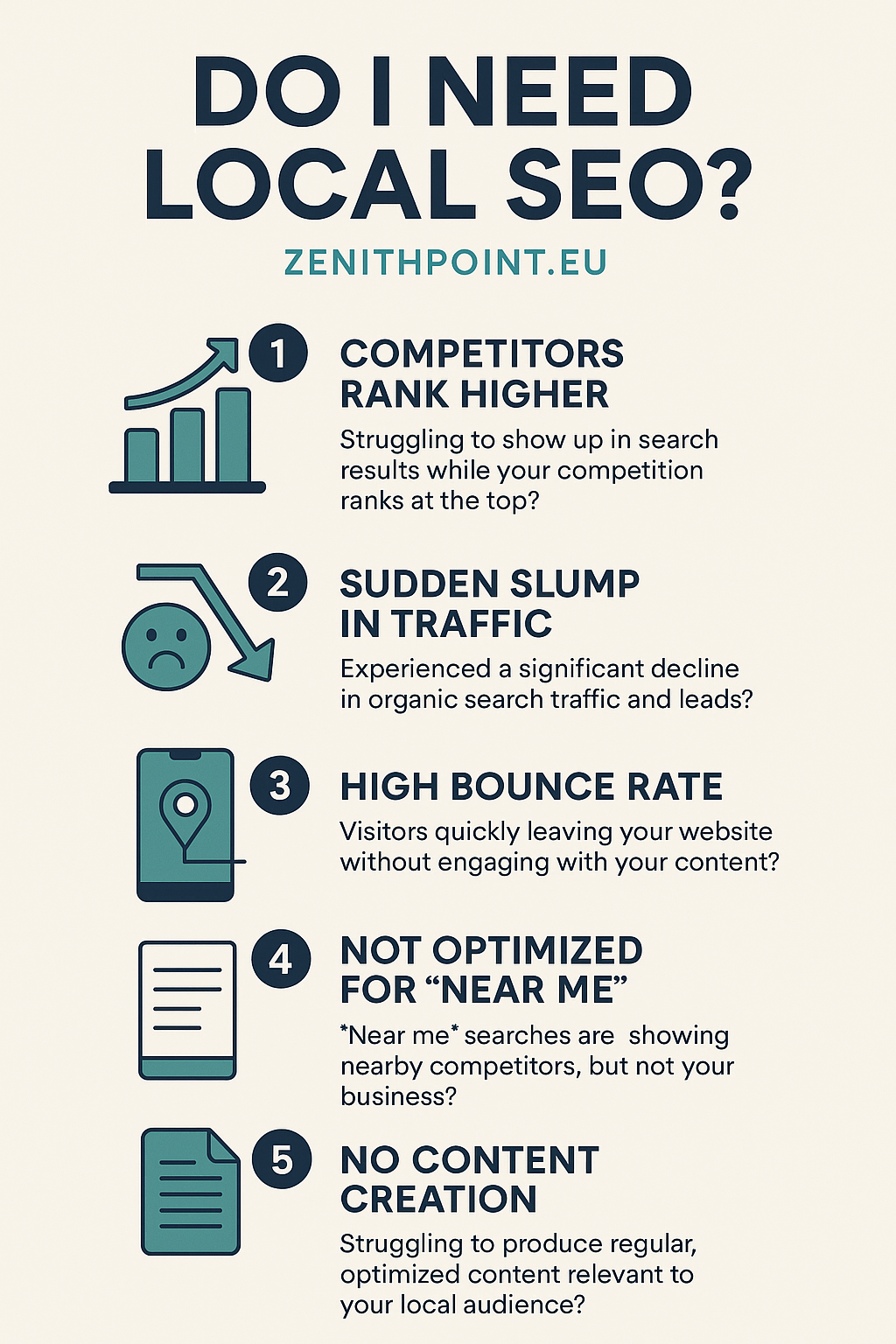
Every small owner wants a crowd at the door, but the web is so packed these days that even awesome shops can sit unnoticed. We’re now staring down 1.7 billion websites, and yes, that number keeps climbing every second. If your sales come when neighbors walk in—or pick up the phone—you sort of have to grab every trick in the toolbox. Enter Local SEO, the map-reading, storefront-highlighting, data-polishing cousin of plain old search engine optimization. The big question is whether that cousin is worth your time. TL;DR Visible on Main Street but quiet online? Local SEO turns the dial in your favor. It helps your business appear in those quick near-me searches and, more importantly, bumps you into that coveted Local 3-Pack the folks see at the very top of Google. Running a website with no brick-and-mortar address? Regular organic search polish is probably enough, so save the heat for later. What Is Local SEO? Local SEO zeroes in on customers sitting right outside your office or a few subway stops away. When someone taps best taco truck near me or plumber in [your city], a little behind-the-scenes code-and-claim game decides which pins pop on the digital map and whose number lands at the top. Local SEO vs. General SEO General and organic SEO casts a wide net, hoping to attract web users from anywhere in the world. Local SEO, on the other hand, narrows the focus to people who happen to be down the street and are ready to act right now. Data That Packs a Punch In short, local SEO is the bridge that turns a quick online look-up into cash register noise down the block. 3 Signs You Need Local SEO 1. Competitors Steal Your Spotlight If your rivals are plastered across Google’s first page while you fade into the background, they’re snatching the customers who could be yours. A well-timed local SEO polish can yank you back into the light. 2. Traffic Suddenly Vanishes Web traffic comes and goes like wind, but a sharp dip often points to an algorithm tweak that left your site off the map. Refreshing local signals lets search engines know you’re still in the game. 3. People Click Away Fast A high bounce rate suggests visitors arrived, checked, and bolted, probably because the content felt out of place. Localizing keywords and headers invites them to stay a while. 4. You’re Missing Out on Near Me Searches If you don’t tweak your site for near me phrases, people standing a block away can’t find you. Local SEO pushes your address, phone number, and even one-click directions front-and-center. 5. You Don’t Publish Local Content Restaurants, salons, and auto repair shops rank higher when they post specials that mention Main Street or that new bus line. Fresh, place-based articles or videos signal authority and give neighbors a reason to stop by. Local SEO vs. Organic SEO: Which One Do You Need? Best practice? Use both. Organic traffic builds long-term trust while local juice catches urgent buyers. How to Get Started With Local SEO 1. Claim Your Google Business Profile Make sure your Name, Address, and Phone Number (NAP) match across Maps, Yelp, and even Apple Maps. The moment a customer taps Directions, everything should connect without a hitch. 2. Short, Local Phrases Matter Slide your city name, favorite neighborhood, or even that quirky-looking ZIP code right into blogs, titles, and meta tags. 3. Ratings You Can Trust Ask happy customers to drop reviews on Google, Yelp, or trade-specific directories. Bright stars not only bump rankings—they boost credibility. 4. Build Bridges, Not Walls Share your info with local directories or get mentioned by a community paper. Every reference builds digital trust. 5. One Page, One Place, One Story Create dedicated landing pages for each service area or location. Keep content relevant to each audience. 6. Talk Shop and Talk Soon Post updates about local events or common customer questions. Keeping things fresh shows you’re active and trustworthy. A Quick FAQ Stop Do I Need Local SEO, Anyway? Yes, if you want the mom searching Maps on her phone to find exactly you before lunch. Can I Tackle This Alone? Yes! Start with your Google profile and sprinkle in those local phrases. Consider hiring help when you’re ready to scale. How Long Before I Party? Expect to see progress within 3 to 6 months, though competition can extend this window. Do I Still Need Local SEO with Just One Location? Absolutely. If locals are your lifeblood, local marketing is your fuel. How Zenith Point Makes You Visible Zenith Point Digital Marketing focuses on businesses that live and serve in one zip code. We’ll tune your Google Business Profile, polish customer reviews, and build the citations search engines trust. We then sprinkle in neighborhood-specific blog posts so you pop up whenever folks ask, Who’s closest? Tailored Plans, Real Foot Traffic Whether you’re the corner coffee house or a single auto repair garage, we design a local SEO plan you’ll actually notice. Our clients see more ringing phones, fuller parking lots, and an uptick in walk-ins. A Strategy, Not Just a Catchphrase Local SEO sounds trendy, but to your cash register, it feels practical. Companies that skip it risk being invisible when shoppers are deciding whom to pick. Get Found When It Matters Most Today could be the day your next customer searches for services and finds you first. Investing in local visibility lets that moment happen over and over. Enjoyed What You Read? Give a quick clap, share the love, or click follow for fresh tips. Still Wondering? Ask Away. Drop a question below or shoot us a note at Zenith Point Digital Marketing. We’re here to turn that curiosity into traffic.

Do I Need Local SEO? Read More »