sotir

81425fde 9892 4f91 ac9e 9bdcc245db9c

Increasing Conversions with SEO Techniques

TL;DR To enhance conversions through SEO, pay attention to user experience, website organizational structure, content relevance, keyword strategy, and more. Look into real-world case studies such as Walmart, RTINGS, and Aden + Anais who experienced tremendous conversion increases after implementing massive alignment between SEO efforts and user-focused design and functionality. For deeper insights, explore resources like Forbes on improving conversion rates with SEO and Landingi’s SEO conversion optimization guide. Why Do SEO and Conversion Rate Optimization Go Together? SEO and CRO are considered two distinct tactics, and in practice, they work best together. SEO brings new users to your website while it is CRO that converts the visitors into actual customers. Using both strategies together means that your content not only ranks but also resonates. For businesses looking to strengthen their technical foundation, proper technical SEO optimization is essential. Real Case Studies That Prove SEO-CRO Works Walmart: Mobile Primacy for Increased Conversions Challenge Walmart’s site had a mobile-first design problem where users on mobile devices were neglected. Strategy Improved user experience and enhanced product search to expedite access on mobile interfaces. Results 20% improvement in conversion rate98% increase in mobile purchases Lesson Maximizing mobile user experience results in significant boost in conversions. RTINGS: Programmatic Pages and Structured SEO Challenge Scaling high-quality content creation while ensuring all aspects of SEO were covered. Strategy Refined site structure using categories and subfoldersUsed programmatic SEO to generate thousands of product comparison pagesLeveraged YouTube for added traffic and backlinks Results 31.47 million visits in one month Lesson Structure and automation can drive traffic and targeted conversions. AAD: Blog and Navigation Redesign Challenge Underperforming blog content and unclear navigation Strategy Rewrote blog posts with transactional intentImproved product pages for SEO and relevanceEnhanced navigation and renamed categories for clarity Results +63% revenue in the U.S.+345% revenue in Germany+418% increase in transactions Lesson Clear pathways and relevant blog content can drastically improve both conversions and search rankings. Improvement Strategies to Boost Conversions with SEO 1. Enhance Mobile Usability Incorporate responsive designIncrease page speedPrioritize mobile-first indexing 2. Optimize Site Structure Categorize contents into appropriate foldersMaintain uniform URL patternsSimplify navigation 3. Use Programmatic SEO Use templates to automate repetitive page creationUtilize schema-rich comparison and review formats 4. Align Content With Search Intent Transition from pure information to more transactional contentAdd context-appropriate CTAs for your pageUse everyday language aligned with keywords 5. Update and Improve Existing Content Remove indexed posts that are outdatedIdentify content deficienciesFill those gaps with content designed around relevant keywords and user intent 6. Use A/B Testing for CTAs Use VWO or AB TastyTest various button text, colors, positions, and copy FAQs: Generative Engine Optimization What is Generative Engine Optimization? Generative Engine Optimization (GEO) is the use of AI to create or modify content based on user intent and search engine algorithms. It integrates machine learning with SEO. Does GEO replace traditional SEO? No, it enhances it. GEO enables rapid content development and advanced personalization while still requiring thorough keyword planning and SEO best practices. Can GEO assist in driving conversions? Absolutely. AI technology can create tailored CTAs, relevant headlines, and well-organized content that seamlessly leads users toward meaningful actions. How Zenith Point Digital Marketing Can Help At Zenith Point Digital Marketing, we integrate SEO with cutting-edge conversion optimization. No matter if you are a scaling e-commerce business or an affiliate content website, we assist you to: Improve overall user experience (UX) through page redesignsUtilize programmatic SEO strategiesConduct content optimization through A/B testingDevelop blogs that increase traffic and salesStrengthen your social media marketing presence Join with us and let’s work together to convert clicks into customers.Get in touch here: Contact Zenith Point Final Thoughts Conversions are the result of deliberate strategy. When SEO and CRO are aligned—through smart keywords, persuasive copy, and streamlined UX—your digital footprint not only gets discovered, but it generates activity. Start optimizing now and enable your content do the heavy lifting on conversions. s

Increasing Conversions with SEO Techniques Read More »
6ffa20f2 aad5 4fd4 a803 c8efb55554ea

Affordable SEO Services for Small European Businesses

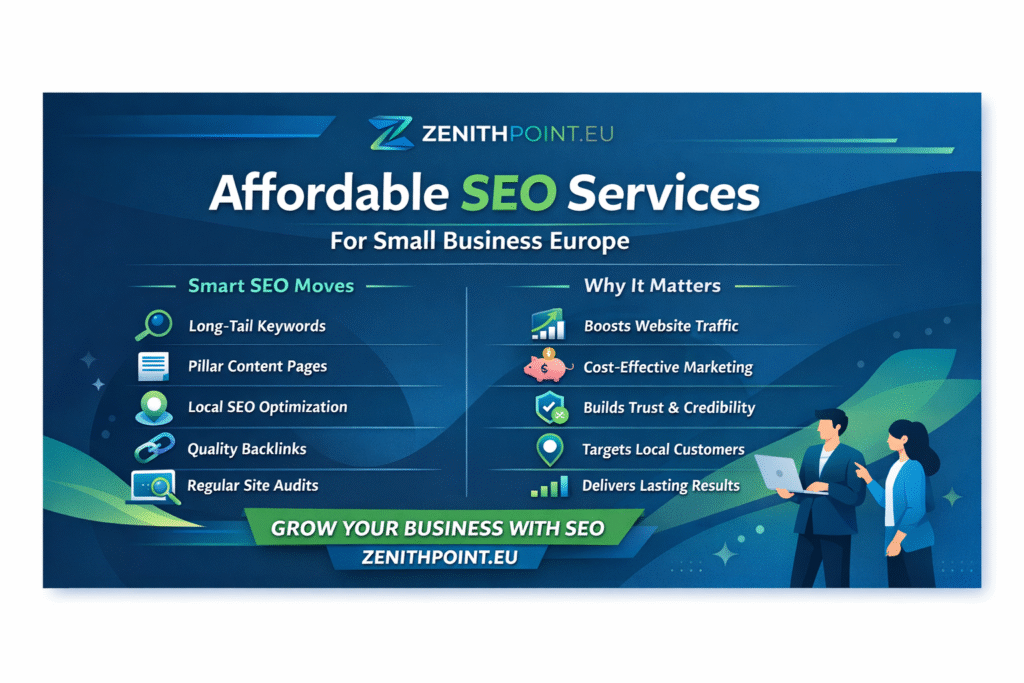
TL;DR European small shops can spend less on paid ads and still get noticed online. Affordable search engine optimization ramps up visibility, pulls in free traffic, and adds to the bottom line. Zenith Point Digital Marketing crafts wallet-friendly SEO plans that fit local cafés, indie shops, and young startups alike. Why Does SEO Matter to a Corner Store in Berlin or a Workshop in Lisbon? Because most shoppers open their phones before they even leave the house. If a website doesn’t show up on page one of Google, it might as well be invisible. As explained in How SEO Drives Business Growth and Revenue, strong SEO places businesses directly in front of people who are already searching with intent to buy. Small firms that fine-tune their SEO suddenly appear in front of customers who are ready to act. Five Quick Wins Small Businesses Get When They Invest in SEO What Makes Quality SEO Inexpensive? Affordable SEO feels possible when you stop thinking price tag and start thinking payoff. A few smart moves—long-tail keywords, high-return pieces, and clever use of free tools—separate the spend from the value. No corner-cutting necessary. 1. Go After Long-Tail Phrases A phrase like eco-friendly hair salon Amsterdam lands customers with a plan. Small businesses enjoy calmer competition here, so time spent optimizing for these terms often pays off quickly. 2. Reserve Short-Tail Terms for Pillar Pages Terms such as hair salon reach lots of eyes, yet the crowd is fierce. Saving them for cornerstone pages lets your core offering steal the spotlight. 3. Run Solid Keyword Research Using Free Resources Google Keyword Planner, Ubersuggest, and even Google Trends can help you: 4. Build Useful, Engaging Content That People Stick To Search engines reward pages that sound human and answer fast. Focus on user intent, sprinkle in photos or clips, and keep lines short so the eye keeps moving. Pairing content with solid foundations like technical SEO ensures those pages can actually perform. 5. Optimize for Local SEO Local SEO isn’t just a nice-to-have; for a bakery in Lisbon or a plumber in Prague, it’s the lifeblood. Start by claiming your Google Business Profile and making sure every detail pops. Toss in phrases like digital printing services Berlin so searchers hear your name the second they hit send. Next, gather reviews and keep your Name, Address, Phone number tidy as a school notebook. 6. Secure High-Quality Backlinks A single shout-out from a trusted magazine can boost your ranking more than twenty blog posts. Reach out by hand, ask if you can write a couple of paragraphs, or simply swap links with a friendly neighborhood shop. Listing in top-notch directories also helps—just steer clear of the shady ones. Amplifying content through channels like social media marketing can also attract natural backlinks. 7. Perform Regular Website Audits Broken links, lagging load times, and dusty old posts are like crumbs under a café table; they ruin the vibe. Grab a free tool like SEOptimer and scan for trouble at least once a month. Fix what you can, keep the rest on a to-do list, and watch your score climb. 8. Consider Outsourcing SEO If running your business feels busy enough, handing SEO to a pro can feel like hiring a personal chef instead of boiling pasta every night. An agency brings experience, advanced tools, and a clear roadmap while you keep your eyes on sales. Many owners say the peace of mind makes the euros worth every single cent. FAQ: Affordable SEO Services for Small Business in Europe How much does SEO typically cost for small businesses in Europe?You’ll find affordable packages sitting in the €200–€800 monthly lane, with pricing that shifts based on competition and how deep you want to go. Can I do SEO on my own?Absolutely. Plenty of business owners teach themselves SEO and succeed. You’ll need patience, regular practice, and a willingness to learn. Most start with keyword research, local tweaks, and fresh content, supported by free tools. How long does it take to see SEO results?SEO works on a longer timeline. Many businesses see meaningful movement within three to six months, provided they stay consistent. Momentum typically builds after that initial lift. Is SEO better than paid ads?SEO creates a traffic stream that keeps flowing even on tight budgets. Paid ads deliver speed but disappear once spending stops. Smart marketers often blend both. How Zenith Point Digital Marketing Can Help Zenith Point Digital Marketing focuses on pocket-friendly SEO solutions for Europe’s smaller businesses. From a neighborhood bakery in Paris to a startup coder in Dublin, our team concentrates on high-impact actions like keyword mapping, optimized content, technical improvements, and local SEO signals. The result: stronger visibility without draining your cash. If you’re ready to explore your options, you can contact us here. Make the First Move Toward Growth Don’t wait for someone else to claim first-page space. Start refining your site now and turn free search traffic into a growth engine that pulls your brand forward month after month.

Affordable SEO Services for Small European Businesses Read More »

f56071d6 9714 4305 b5a5 944762c9c2c1 md

Custom Marketing Strategy for SaaS Startups

TL;DR A winning marketing plan for a software-as-a-service company blends customer chats, slick online ads, and hands-on outreach. Start with search engine tricks, pay-per-click budgets, email blasts, short videos, smooth onboarding, and word-of-mouth rewards. Top it all off with friendly support and careful message-taming. Zenith Point Digital Marketing crafts these plays for founders who want fast, steady growth. Introduction Launching a piece of cloud-based technology is only half the fun; coaxing loyal users into paying month after month is the real deal. Unlike corner shops, subscription services feast on recurring dollars, engagement, and trust that doesn’t wobble. Founders need marketing moves grounded in data and trimmed to fit their product’s personality. At its core, SaaS marketing focuses on driving awareness, adoption, and retention for subscription-based products, as outlined in this overview of what SaaS marketing is and how it works. This post pulls together clear steps for building an agile strategy that ramps up sign-ups and keeps them coming back. Leveraging Community Feedback for Product-Led Growth Build a Community-Led Feedback Loop Real user chatter can be the jet fuel a young app needs. By tuning in, teams spot rough edges, polish features, and, just as important, make customers feel seen. Running surveys and hanging out on Reddit, Slack groups, or Twitter turns product guesses into solid action plans—an approach commonly highlighted in modern SaaS marketing frameworks. Open- and closed-ended questions both matter; the first sifts fresh ideas, the second checks for patterns. Users reply in the spaces where they feel the most pain, guiding developers straight to the fixes that lift retention rates. When you lean on the community, users feel heard, and word spreads on its own. The product ends up looking and feeling more human. Make Your Brand Shine Online with SEO and SEM Search Engine Optimization for Organic Growth SaaS teams that plant seeds in SEO often harvest significantly more sales leads per dollar spent. Proven guides on effective SaaS marketing strategies consistently point to SEO as a long-term growth engine. Pay-Per-Click (PPC) Advertising Search ads put offers in front of curious eyes just as they open Google. Retargeting on platforms like LinkedIn or Facebook keeps your SaaS top of mind until curiosity turns into a click. Split-test everything—phrases, buttons, even CTA colors. Stack smart SEM with strong SEO, and you’ve built a bright digital billboard prospects can’t ignore. Turn Casual Visitors into Loyal Users with UX Tweaks Web traffic is nice, but revenue is sweeter. A few focused tweaks can turn a site from a pretty showpiece into a conversion engine: Keep Them Talking with Smart Email Touches Email isn’t shiny and new, but it still delivers one of the highest ROIs in SaaS. Segmented and personalized campaigns nurture users from signup to paid conversion: Cut Entry Fees with Trials That Say “Go For It” Freemium tiers and free trials lower adoption friction and build trust fast. When users experience value firsthand, pricing objections shrink dramatically. In-app prompts and upgrade nudges help convert free users into paying customers at the right moment. Activate Referrals and Loyalty Build Referral Programs Turn happy customers into advocates with referral incentives such as credits, discounts, or gift cards. Make sharing effortless with in-app buttons and simple links. Launch Loyalty Programs Reward long-term users with exclusive features, early access, or special pricing. Recognition builds emotional loyalty, not just transactional retention. Maximize Retention Through Onboarding Seamless User Onboarding First impressions matter. Clear tutorials, tooltips, and friendly check-ins reduce confusion and help users reach their first “aha” moment faster. Reduce Churn with Customer Success Regular feedback, webinars, and proactive support turn customers into long-term partners instead of short-term subscribers. Provide Outstanding Customer Support Support Channels and Responsiveness Chat, email, and phone support give users options. Speed, empathy, and clarity are often the difference between churn and loyalty. Leverage Support Data Support tickets reveal product gaps and content needs. Patterns in questions often point directly to your next optimization opportunity. Use Video Marketing to Engage and Educate Effective Video Content Types Explainer videos, product demos, webinars, and customer testimonials help users understand value faster than text alone. Video Distribution Publishing on YouTube, embedding videos on landing pages, and sharing them via email increases engagement and time on site. Manage Online Reputation and Public Relations Online Reviews and Trust Most buyers read reviews before subscribing. Encourage satisfied customers to leave reviews and respond professionally to every piece of feedback. Craft a Strong Brand Narrative Consistent messaging across blogs, social media, and PR builds trust. Stories about why your SaaS exists resonate more than feature lists alone. Case Studies: What Works in SaaS Marketing Intellectsoft A focused content and multi-channel strategy drove a 159% increase in website traffic and hundreds of thousands of monthly organic impressions. International Software Provider Combining paid ads with in-depth content helped acquire over 1,000 new customers in a single quarter, proving the power of integrated channels. How Zenith Point Digital Marketing Can Help Zenith Point Digital Marketing builds custom marketing strategies for SaaS startups that want predictable, scalable growth. From SEO roadmaps and paid acquisition to onboarding optimization and retention strategies, our team aligns marketing execution with real business outcomes. You can explore real-world results in our SaaS case studies or review how we approach ROI-driven SEO in our guide to SEO pricing, costs, and ROI models. If you’re ready to design a custom marketing strategy for your SaaS startup, get in touch with Zenith Point and start building sustainable growth today. FAQ: Custom Marketing Strategy for SaaS Startups What is a custom marketing strategy for SaaS startups? It’s a tailored plan that aligns channels like SEO, paid ads, content, email, and onboarding with your product, audience, and revenue goals. Why is SEO important for SaaS companies? SEO drives high-intent traffic from users actively searching for solutions, making it one of the most cost-effective long-term growth channels. How does onboarding impact SaaS growth? A smooth onboarding experience reduces churn, increases activation, and turns new users into long-term subscribers. Which channels

Custom Marketing Strategy for SaaS Startups Read More »

5103ec21 20a8 4823 a55a 0129f2e0af81 md

White-Label Digital Marketing Services EU

TL;DR European ad agencies are turning to white-label digital marketing services so they can land bigger projects without suddenly needing a hire a full staff. Companies like MASS DATA and Softtrix will handle the SEO, PPC, social media, or analytics side, letting the agency slap its logo on the reports and keep the client facing chats. It saves money, scales easily, and keeps brand names shiny. What Are White-Label Digital Marketing Services? A white-label service is simple: another firm does the work, but you present the results as if your own crew carried them out. The concept is widely used and explained in industry discussions like this overview of white-label services. Most packages bundle things most clients ask for: Imagine a boutique Berlin agency farming out PPC ads to a provider in Lisbon. The German firm sends the dashboard to its client, the logo says its name, and everybody leaves happy. Why EU Agencies Are Embracing White-Label Solutions 1. Scalability Without Hiring Bringing an SEO wizard or a data scientist on payroll can mean awkward office space, benefits, and months of training while the bills keep coming. A white-label partner is ready yesterday, not three recruitment drives from now. 2. Faster Time to Market Because these teams already know their playbooks inside-out, campaigns that would stall for days can roll out overnight. Tight deadlines feel less like cliffs and more like mild slopes. 3. Happy Clients Stick Around Agencies that tap into white-label veterans like MASS DATA or Softtrix tend to see their customers smiling more. Those names lean on proven tactics, so quality stays steady, and client loyalty often follows. 4. Spend Less, Do More A surprising number of European firms look overseas for talent so they don-t bleed money while chasing high standards. By paying only for what you burn each month, the usual overhead shrinks pretty fast. A Few Go-To Names in Town MASS DATA This U.S.-born outfit has been spreading across Europe. Its white-label menu hits SEO, PPC, analytics, and even some behind-the-scenes automation. Because decisions are rooted in hard data, agencies can tell their clients everything is humming along and never break a sweat over the results. You can read more about their approach in this official release on MASS DATA’s white-label marketing and data solutions. Softtrix Softtrix does private labeling from start to finish, covering everything from link-building to social campaigns. When an agency is drowning in work, short on experts, or watching output wobble, Softtrix slides in without ever putting its name on the final report. How to Select a White-Label Marketing Partner Picking the right white-label partner isn-t guesswork when you have a quick checklist in hand. Transparency matters. Look for clear deliverables, open pricing, and dashboards that update while you sleep. Expertise isn-t optional. The company should speak the same slang the SaaS, real estate, or e-commerce experts do. Reliability keeps you sane. Consistent turnaround times plus numbers you can trust are non-negotiable. Support saves the day. A dedicated account manager who replies quicker than you can refill your coffee is worth their weight in gold. Private-Label vs. White-Label: Know the Difference Private-label and white-label sound alike, yet they don-t play the same game. A Solid Example You Can Actually Picture Picture a mid-sized real estate agency in St. Louis. It outsources SEO work to a white-label shop in Mumbai. Three short months later, the numbers look like this: The best part? The agency gets to brag about all those wins, while the overseas team sits quietly in the background. FAQ: White-Label Digital Marketing Services in the EU What-s the main perk of white-label marketing?It lets you offer new services without hiring an army or renting extra office space. Is it legal in the EU?Absolutely, as long as you obey GDPR and any other local rules. Will my clients know I farmed the work out?No way. All reports, emails, and dashboards come dressed in your brand, not the vendor-s. Can I pick certain tasks to hand off? You can. Many agencies sock only their SEO, PPC, or email work to a contractor and keep the rest in-house. Its totally normal to cherry-pick the services that free you up the most. Are the pros GDPR-compliant? Good question. A trustworthy partner, like MASS DATA, obeys every letter of the EU privacy rules, so your clients data stays out of hot water. Always ask about compliance; the right answer should be a given. How Zenith Point can help Zenith Point Digital Marketing dishes out white-label work tailored for EU outfits. Our crew supports agencies with services like technical SEO and social media marketing, running numbers, tweaking algorithms, and writing copy without flashing our own logo. You stay client-facing, while we deliver results quietly in the background. You can also explore real-world outcomes in our case studies. Ready to scale smart? If you want growth that feels effortless, let Zenith Point play the silent sidekick. We handle the heavy lifting so you can chase new clients and keep the old ones happy.If you’re ready to talk, reach out via our contact page.

White-Label Digital Marketing Services EU Read More »

a04aee1e 463e 49b9 b022 d33f177f7c2e

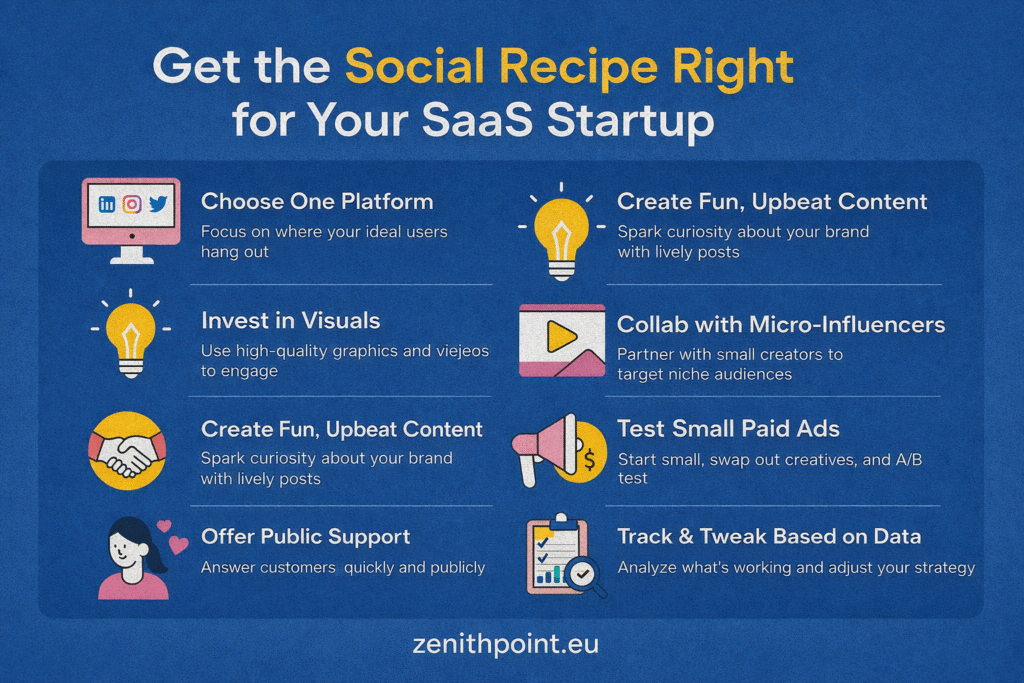
Get the Social Recipe Right for Your SaaS Startup Social media isn’t a bonus anymore; it’s the loudspeaker every new SaaS brand needs. If customers don’t see you online, they move on, simple as that. Scroll through your feeds for a minute and you’ll spot dozens of content types, from short clips and carousels to live Q&As. All those choices can make even the boldest founder freeze up with too much info. This post is meant to clear the fog and hand you real steps you can use today, whether your company has just two employees or a tiny marketing crew trying to hustle. Many of these tactics align with proven approaches outlined in guides like this SaaS social media strategy breakdown. Quick Takeaways Why Social Media Matters for SaaS Startups Think of social media as the window display for your software shop. Anyone scrolling past can peek inside, poke around your pages, and choose whether to step through the door. For young SaaS companies, where folks weigh trust and explanations carefully, that window offers a handy spotlight to: Research on digital entrepreneurship also highlights how social platforms drive visibility and growth when used strategically, as noted in academic insights on social media optimization and entrepreneurship. Choosing the Right Platform Don’t Spread Yourself Too Thin. Pick One Good Spot. Posting everywhere at once can feel like shouting in an empty hall. Instead, plant your voice where it will land. Build Awareness First: Top-of-Funnel Strategy Nobody clicks the purchase button if they’ve never heard a peep. That early visibility is the whole point of your social campaign. To attract attention, try these quick hits: Customer Testimonials: Show Social Proof Nothing sells a product like real people saying it works. Customer reviews act like a friendly nudge from a neighbor you trust. “Consistency is key. Use a content calendar to stay visible and relevant,” says Kevin King, CEO of Anytime Baseball Supply. Create Scroll-Stopping Visuals Images and videos do the heavy lifting when text starts to feel sleepy. Readers often skim, but a bright visual can yank their eyes back. Types of Visuals That Work for SaaS “Visuals convey messages quickly and boost shareability,” notes Casey Meraz, CEO of Juris Digital. Just remember to slap your logo on every image so folks know who made it. Form Strategic Partnerships Joining forces with another brand can spread your name faster than solo work. When two audiences meet, everybody wins. Smart Collaboration Ideas “Choose partners that complement your SaaS product—not compete with it,” says Eran Mizrahi, CEO of Ingredient Brothers. Work with Mid-Level Influencers A superstar influencer may reach millions, but a mid-tier creator often chats with their followers on a first-name basis. That little extra warmth makes a big difference. Why Mid-Level Influencers Matter Before reaching out, check if their vibe matches your brand and audience. Many brands work with these influencers to make how-to videos, live case studies, or quick walkthroughs. Use Targeted Paid Social Ads Organic reach is nice, but paid placements blow the doors wide open. Start with simple awareness ads to see who bites. Kick off the experiment with a tiny daily budget, swap visuals, tweak copy, and run A/B tests until the data talks. Tracking the right KPIs—reach, engagement, CTR, and conversions—is critical, as explained in this overview of key SaaS social media metrics. Joy Organics CMO Gerrid Smith says paid ads help you fine-tune your message and grow a first-party audience. Once you spot a winning combo, crank up the spend bit by bit. Give Customer Support on Social Shoppers hate waiting, and many fire questions at brands through Twitter or Facebook. Keep streams open, monitor mentions daily, and turn complaints into chances for improvement. Leverage Social Listening for Market Research Your audience is already talking, so why not eavesdrop—on purpose? Visit forums, social feeds, and review sites. Scan for the little hints they drop. What annoys them the most? Which slick feature do they rave about? Sometimes a single tweet can spark the next big product tweak. Those casual mentions can steer your blog headlines, web copy, and even that next campaign slogan you thought was perfect already. These insights pair well with forward-looking strategies like generative engine optimization to stay visible as search and social evolve. FAQ: Social Media Management for SaaS Startups How often should a SaaS startup post on social media?Aim for the sweet spot: three to five updates a week. A handy calendar keeps the pipeline full so you won’t scramble at 7 PM. What social platform is best for SaaS?Business-to-business crowds live on LinkedIn; consumer-first brands usually find their groove on Instagram or Facebook. Know where your people hang out. Should we pay for ads right out of the gate?A small budget can work miracles when targeted well. Test, learn, then decide whether to dial up the spend. How do we know if any of this is working?Likes matter, but watch clicks, lead quality, and actual sign-ups. Those numbers tell a story; the hearts and thumbs-up are just decoration. Can social media drive real sales?Absolutely. When solid content warms the crowd, retargeting can finish the job. Trust built in the feed often carries over to the checkout page. How Zenith Point Digital Marketing Can Help Zenith Point works with SaaS startups that want their social channels to actually perform, not just look busy. We help identify the best platforms, create high-impact visuals and content, align social with SEO and growth goals, and support campaigns that turn attention into measurable leads. Final Thoughts Social media mastery isn’t about clocking hours; it’s about smart tweaks that hit home. Pick the right platform, offer real value, and talk to your audience like they’re in the same room. Try the tips above, track what works, and watch casual followers turn into loyal fans. Keep experimenting, stay flexible, and remember that solid content paired with real conversation does the heavy lifting. TL;DR: Focus on one platform, lead with value and visuals, use data to guide

Read More »

7b49b116 cad1 4e91 b1ae 9b1547138abe md

Where Should I Register My Business? Best Online Databases

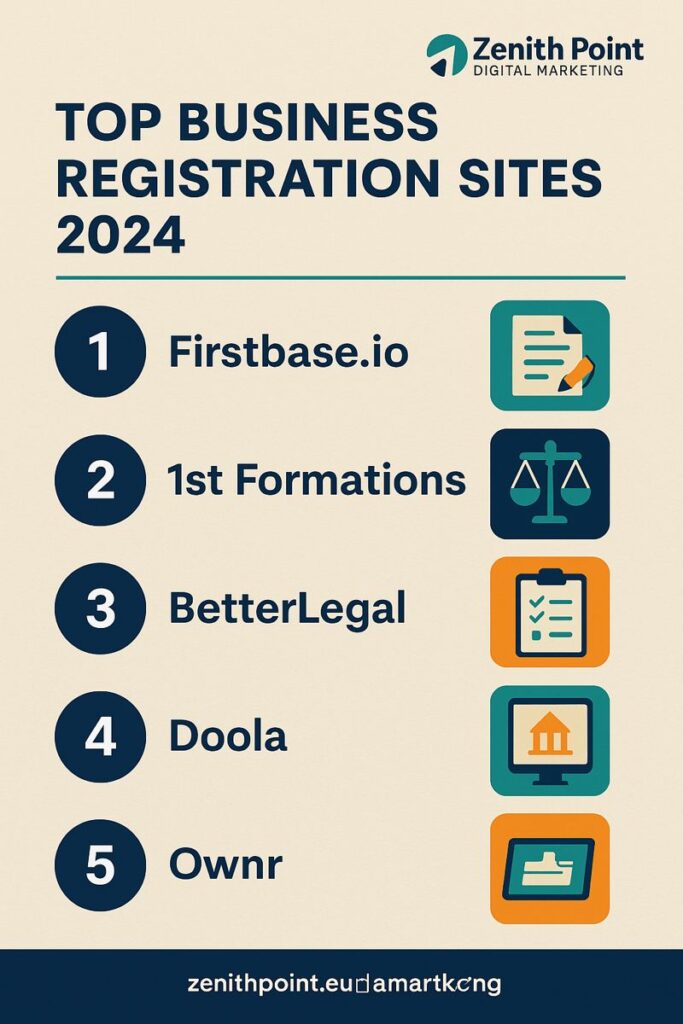
In What Database Sites Should I Register My Business? TL;DRA smart registration choice lifts your search rankings, earns customer confidence, and opens new sales channels. Firstbase.io, BetterLegal, Doola, 1st Formations, and Ownr streamline the paperwork for different countries. For fast local visibility, pair those services with Google My Business, Yelp, and similar high-authority directories. Always weigh ease, pricing, built-in tools, and customer support before signing up. For foundational guidance, resources like the Harbor Compliance guide on registering an online business and the SBA’s official registration overview are useful reference points. Why Sign Up Anywhere Online? Today the paperwork is done online, yet plenty of people think its merely a government box to check. In reality, a solid listing can: On many directories you also snatch extras like a registered agent address, banking referrals, and even tools that polish your digital reputation. Industry roundups such as this LinkedIn overview of top business registration sites highlight how visibility and compliance now overlap. What to Look For in a Business Registration Site High Domain Authority Websites with high domain authority usually sit at the top of search results. Signing up on one of these popular platforms gives your own site a chance to climb right along with it. Ease of Use Nobody wants to wrestle with a confusing dashboard. Pick a service where buttons work the first time and setup feels more like clicking next than solving a Rubiks cube. Cost Transparency Some registrars flash a zero-dollar sign but sneak in handling fees later. The best platforms lay out every cent so you can budget without headaches. Additional Services A basic filing is great, but extras can save you time. Look for companies that bundle compliance reminders, virtual office space, or real live human support after you hit submit. Top Business Registration Platforms to Consider Firstbase.io: Simplified Business Formation for Startups Best For: International entrepreneurs and tech startups Firstbase.io feels like it was made for founders who live in their browsers. The entire process of forming a U.S. entity, from dotting i’s to signing online, takes only minutes. Its upfront pricing and modern UX have turned it into a darling among SaaS builders and digital nomads. 1st Formations: Quick Company Registration in the UK Who it Helps: Homegrown businesses and foreign founders setting up shop in Britain. 1st Formations focuses on putting UK company folders in order before lunch. Customers praise the teams no-nonsense advice and speedy replies. Extras like a registered office address and day-to-day virtual-post box keep paperwork flowing to the right place. Ticking those boxes lets owners spend more time hustling and less time stressing about red tape. BetterLegal: Zip-Through U.S. Business Filing Who it Helps: Stateside hustlers who want paperwork done yesterday. BetterLegal lives up to its name by filing forms at warp speed. Flat-rate pricing means the number on th- invoice is the number you expect. Help is a quick chat away, so even first-timers dont feel lost in legal jargon. When every hour counts, this platform locks in a business ID without the usual legal shuffle. Doola: LLC Formation Made Simple Who it Helps: Founders who swear by limited-liability companies, no exceptions. Doolas dashboard walks users through each checkbox as if it were a grocery list. Compliance reminders and ready-to-sign templates slice the guesswork. Pricing stays upfront, so surprise bills dont crash the budget party. For anyone wedded to the LLC shape, Doola cuts fluff and adds clarity-start to finish. Ownr: One-Stop Shop for Canadian Entrepreneurs Who Its For: New startups and small firms across Canada. Ownr packs almost everything you need to officially kick off a company in one dashboard. Youll find: Because the platform automates the paperwork, something most Canadians still file by hand, what used to take weeks can now wrap up in a single afternoon. Extra Exposure: High-Authority Directories Forming a business gets you nowhere if customers cant find you. Listing in trusted online directories gives your name a fighting chance. Picking the Right Platform, Step by Step Read Reviews and Testimonials Before settling on any platform, scan a few user reviews. Other entrepreneurs love to share the bumps-and-bruises stories that reveal how dependable a service really is. Get Expert Advice A quick chat with a business advisor or a local attorney can save hours of second-guessing. These pros usually have a short list of go-to platforms that fit your industry and zip code. Navigating Legal Requirements Legal housekeeping isn t glamorous, but it matters: Plenty of modern platforms toss you reminder emails or built-in checklists so you don t drift out of compliance. Avoid Common Mistakes A few small slip-ups can sting: Compliance features are nice, but hiring an expert for a quarterly check-up isn t a bad idea either. Enhancing Your Online Presence Post-Registration With the paperwork behind you, the next play is visibility: Digital Marketing Tips Content marketing works like a gentle magnet. Community engagement pays, too; reply to comments, host quick polls, or shout out local partners. Local SEO tricks-basic name-address-phone consistency, plus reviews from neighbors-let new customers find you first. Understanding budgets and ROI, like those outlined in this SEO pricing guide, helps align effort with results. Leverage Social Media Social feeds are a stage for brand personality, so use them. Hashtags widen the circle, but authenticity keeps followers around. Regular postings and honest replies build trust you can t buy. How Zenith Point Tackles Digital Launches Zenith Point helps startups find their footing in a crowded online world. We walk founders through everything from picking the right site for official registration to polishing a brand after the big launch. Our mission is simple: give small businesses clear steps that line up with their growth dreams. The team can: To see how that works in practice, explore our case studies or drop by our site and grab a no-pressure, free chat via our contact page. FAQ: Where Should I Register My Business? What Happens After You Register Your Business? Soon after you click register, the clock starts

Where Should I Register My Business? Best Online Databases Read More »

7a9fcf03 c8f6 4df9 964f bdd71507e3ab

PPC for Tech Startups with a Tight Wallet

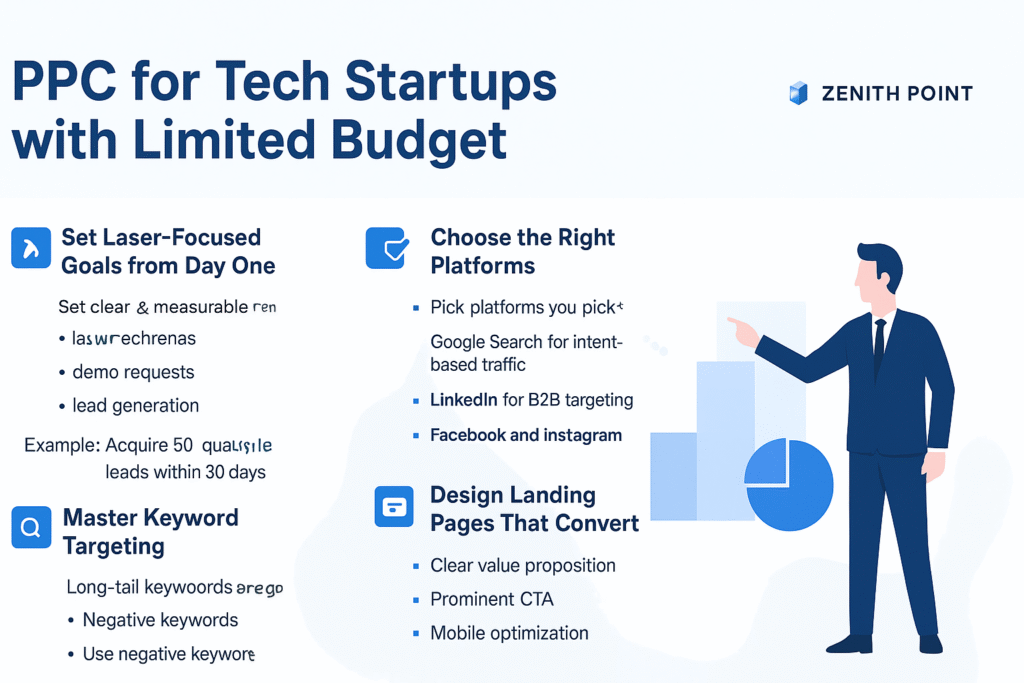
Launching a new app or platform in the tech world is stressful enough. When the marketing dollars run low, the pressure really kicks in. Pay-per-click ads might sound pricey, but a lean, clever PPC setup can pull in early users without emptying the bank account. This post won’t waste time on theory. Instead, we’ll hand you step-by-step tricks that let a scrappy startup squeeze real value from every click, dollar for dollar. Why PPC is a Startup Lifesaver Letting a brand-new site stew for months while SEO crumbs appear can feel torturous. With PPC, clicks arrive today, not next quarter. Meticulous targeting means the pitch shows up in a developer’s feed exactly when they’re scouting fresh tools. Tweak the headline, throw a couple of keywords into the buy list, and you instantly see whether the crowd loves or leaves the offer. Traffic spikes drive real-life proof of product-market fit. An influx of demo requests or beta sign-ups cuts the guesswork. Because costs scale with activity, the budget can swell when the wins are roaring and tighten back when experiments flop. That flexibility is a lifeline for founders watching every outflow. The trick sits in unrelenting optimization, savvy audience slicing, and a readiness to pivot based on fresh data. For more insight, check out Startup Grind’s PPC tips for startups. 1. Laser-Focused Goals from Day One Before you spend a single dollar, pause and ask: What must happen first? Maybe you need a rush of beta signups. Perhaps demo requests are your lifeline this week. Or you might simply want to fill a waiting list for that shiny MVP. Pick one goal, make it clear, and put a number on it. That lets you steer every penny of your budget toward the finish line. Quick Win Frame your targets with the SMART trick. Something like Acquire 50 beta signups via PPC within 30 days at $10 each tells the team who, what, and when in plain words. 2. Hunt for the Right Playground A hundred ad platforms sit in front of you, but not every one will shout loud enough for your crowd. Reddit & Quora Reddit communities like r/technology and focused Quora threads are worth a look. Those spaces can send clicks that actually care about your offer — and they often do it at a surprisingly low cost. One Actionable Tip Pick one or two of these sites and test them side-by-side. Pour 70% of your budget into the winner, then let the other 30% experiment. Master Keyword Targeting: Cut Waste When the bank account is tight, every single click has to count. Focus on long-tail phrases that hit exactly what your product solves for real people. Trim the fat by slapping negative keywords on anything that hunts for freebies or side projects. If you sell a paid tool for accountants, blacklist terms like free accounting software, bookkeeping classes, and accounting books so that money doesn’t drain away. One Actionable Tip Make it a habit to comb through the Search Terms Report. Add anything irrelevant as a negative keyword the minute you spot it. Where Landing Pages Meet Pay-Per-Click No ad spend can outlive a bad landing page. If the page is slow, confusing, or off-topic, visitors bounce even after they’ve clicked. Key Principles Wildly obvious value matters — spell out why your offer is special within seconds. Follow that opening line with a button that can’t be missed: Start Free Trial, Request Early Access, or Book a Demo. Finally, social proof helps: toss in quick testimonials or well-known trust badges to squelch last-minute doubt. If you need help creating high-performing content, see SEO-optimized content services. Make Your Site Phone-Friendly Almost everyone scrolls on a phone these days. If your page looks clunky on a small screen, you’re losing customers before they even read a word. Quick Win: Head over to Unbounce or Optimizely and try out different headlines, buttons, and photos. A simple A/B test can show which version keeps people engaged. Use Smart Bidding When cash is tight, hand-managing your bids feels safer. Soon enough, the numbers will tell you it’s time to let Google do the work. Flip the switch on Target CPA or Maximize Conversions and watch your spending stretch. Just remember to set a firm daily cap so the money doesn’t vanish overnight. Learn more about optimizing campaign performance through technical SEO strategies. Target the Right Folks Someone who visits once rarely pulls out their wallet on the first try. Luckily, digital tools let you poke them at just the right moment. Build custom groups — maybe everyone who’d peeked at pricing — and show those people fresh ads. You could even toss in lookalikes and let the algorithm hunt for twins of your best customers. Action Step: Split your retargeting lists by what visitors did, and craft ad copy that speaks to each group’s unique experience. Keep Measuring Yesterday’s data gets stale fast. The campaigns that win big are the ones poked and prodded every single day. Look at clicks, conversions, and any other KPI until the numbers start waving for attention. Tweak what lags, double down on what pops, and repeat the cycle. Keep an Eye on These KPIs CTR (Click-Through Rate): Is anyone actually clicking when your ad flashes by? A low number here admits a headline or image misfire. CPA (Cost Per Acquisition): How much cash leaves your account for every new signup? A ballooning CPA alerts you that growth can’t come at any price. ROAS (Return on Ad Spend): Does every dollar dumped into ads flip over and bring back more than a buck? Confirm revenue beats outlay before declaring victory. Quality Score: If a user reads your advert, hunts for the keyword, and lands on a page that feels foreign, the score plummets. Tight alignment rescues that rating. ✅ Actionable Tip: Log into reports at least once a week. Mute keywords that drag, cycle fresh ad copy in, and tweak your landing pages until they feel natural.

PPC for Tech Startups with a Tight Wallet Read More »

219254fc e080 436a 9a74 3f0a649f31ad

Choose the Right EU Content Agency for Your SaaS Growth

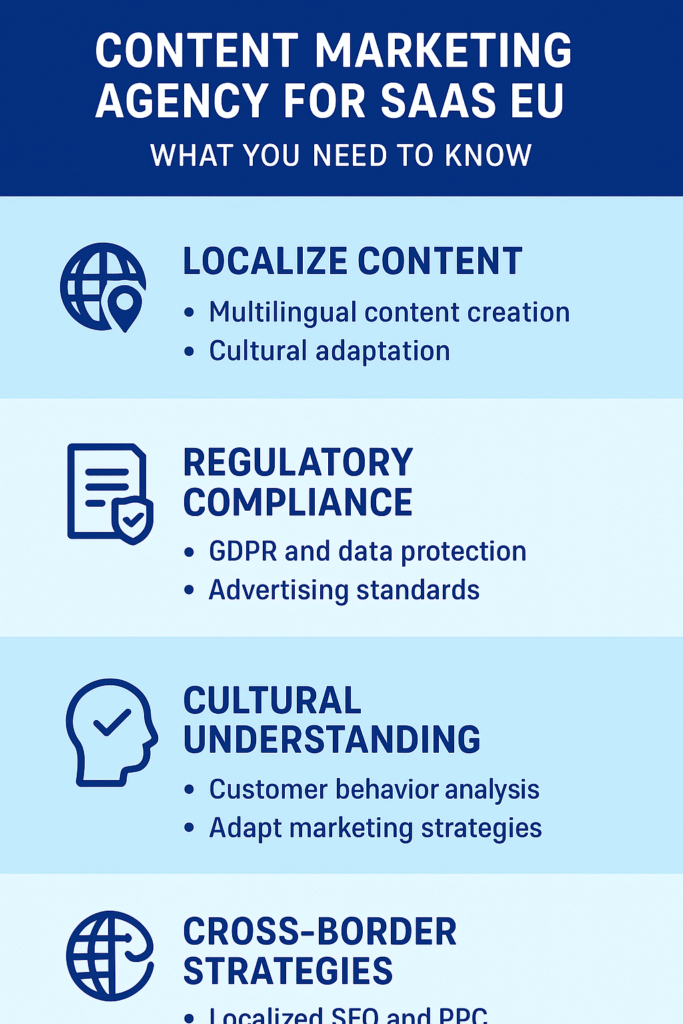
Growing a SaaS product in Europe offers bright new customers, yet the path is anything but simple. You’ll juggle seven languages, wade through stubborn GDPR rules, and still keep your brand voice on point. A specialized EU content-marketing team can take the guesswork out and steer your stories where they’ll land. What’s more, agency pros already know how to tweak a blog post for Berlin as quickly as for Barcelona. They also stay up to speed on the latest local privacy hoops, so your landing pages stay legal. Pick the right partner, and you free up energy to perfect your software while they spread the word. Why Content Marketing Matters for SaaS in the EU For software-as-a-service (SaaS) companies, great content is more than just blog posts; it’s the engine that pulls in and keeps customers. Unlike quick-sell shops, subscription models breathe through long-term, hands-on relationships, and that breathing room gives marketers a chance to educate people over time. In the European Union, where shopper habits, languages, and trust levels flip from one border to the next, that education can get pretty tricky — fast. A well-planned content calendar does heavy lifting by: What Makes SaaS Content Marketing in Europe Unique? Because the EU is stitched together with more than 20 official tongues and a galaxy of regional dialects, quick-and-dirty translation just won’t cut it. Real localization goes deeper, tweaking tone, jokes, and proof points until they feel like home to each audience. Take, for example, a case study aimed at a German cloud-storage buyer. Facts and figures have to shine, and technical precision reigns supreme. Flip that same document over to France, and the pitch might lean heavily on creativity and sleek design, with numbers becoming background color rather than the foreground star. That sort of switch isn’t optional; it’s the difference between being understood and being ignored. GDPR and Modern Marketing In the EU, the GDPR has become the yardstick for anyone who touches customer data. Whether you’re sending a quick email blast or locking a guide behind a signup form, those privacy rules follow you everywhere. Most SaaS agencies based in Europe know the playbook and run audits so campaigns don’t wake up to a legal surprise. Search Engines Sleight of Hand People behind their keyboards behave differently from one border to the next. Google may rule in Berlin, but Seznam still claims loyal fans in Prague, and a few smaller portals linger in Finland and Hungary. Winning narrow markets means plumbing not just the right keywords but reading local search intent like an old newspaper. Choosing the Right Agency 1. Multilingual vs. Literal Translation A decent consultant can shove English copy through Google Translate, but that won’t win hearts or clicks. Serious pros write fresh headlines for native eyes — whether they’re scripting a podcast, drafting an e-book, or punching out a tweet — so every voice sounds familiar. 2. Global SEO Under the Hood Good agencies scour country-specific term lists, draft topical clusters that echo local know-how, and tweak titles and tags according to in-market flair. They also hunt region-sensitive backlinks that keep domain authority climbing without drifting into grey zones. Learn more about effective backlinking here. 3. Cultural Sensitivity Any story you tell needs to nod respectfully at local customs. A tweet that sings in London may fall flat in Florence if it ignores Italian values. Your agency should meet every market halfway by tweaking product messages and case studies to fit its own way of life. 4. Compliance Knowledge GDPR isn’t just red tape; it’s the legal bedrock of EU online marketing. A savvy partner knows the fine print cold, so every newsletter and tracking pixel lands within the rules instead of outside them. That peace of mind keeps your inbox free of unwanted fines. 5. Cross-Border Campaign Management Running the same campaign in five time zones sounds exhausting — and it is, unless you hand off the task to a slick agency. The right team weaves a single content plan across borders while still letting local marketers swap in language, images, and incentives that feel native to their audience. Key Strategies Your SaaS EU Content Marketing Agency Should Offer Localized SEO-Driven Blogging Blogs still pull weight in a lean SaaS funnel, especially when they climb Google for market-specific terms. The best agencies research local phrases, weave them into snappy posts, and pair them with local examples that an IT manager in Munich actually recognizes. Regional hiring trends, compliance headaches, and everyday successes become the frame that turns a generic article into must-read material. Explore generative SEO strategies that elevate your visibility. Multilingual White Papers and Case Studies Executives want proof more than persuasion, and PDFs are still the currency of trust. A well-rounded agency tracks the jargon of a given industry, slips it inside a carefully laid-out white paper, and attaches data from local sources so no skeptic can dismiss it as foreign hype. Regional Social Media Content One-size memes explode the moment they hit a kaleidoscope of cultures. Your partner should swap out images, punch lines, even publication times so a post about product uptime lines up with a local holiday and clicks with neighborhood influencers. Miss that beat and the message — and the money — attend someone else’s party. Email Marketing that Respects Local Laws Most people hate junk mail, and the law hates it even more. That means your list has to be 100 percent above board from the first sign-up. Many EU users prefer their own language and will tune out if they see only English. Agencies should set up multilingual email flows to match. A campaign that sounds funny and casual in Amsterdam could fall flat in a more formal market like Germany. Matching the local tone is a must, not an option. Video and Webinar Localization Europeans love videos almost as much as they love complaining about the weather. Localized explainer clips can keep attention longer than text ever could. Webinars can add a

Choose the Right EU Content Agency for Your SaaS Growth Read More »

c22e8188 9438 462f 9ec1 a53478d3c338

Performance Marketing Agency Netherlands: What You Should Know

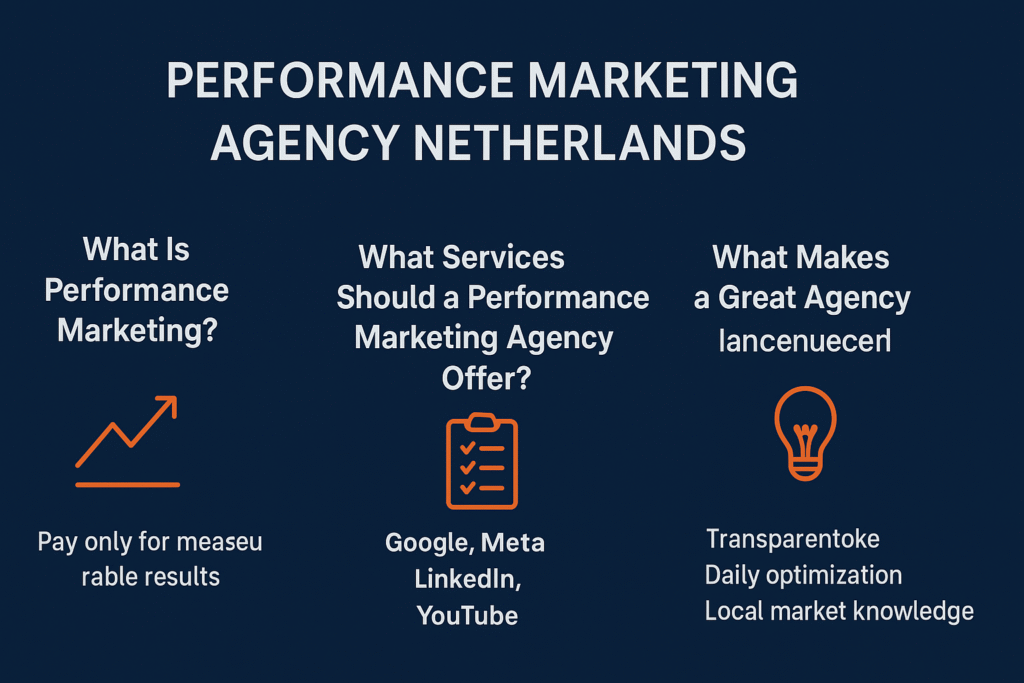
Teaming up with a performance marketing agency in the Netherlands can flip the growth script for your brand. You skip the flat fee and foot the bill only when real clicks, sign-ups, or cash register rings swing your way. In this post, we’ll untangle the nuts and bolts of performance marketing, pin down why it counts, and spotlight the traits to hunt for in an agency. By the end, we’ll show how a partner like Zenith Point puts ROI at the very center of the action. TL;DR A Dutch performance agency charges you only for measurable wins — each click, lead, or sale. The craft sits at the crossroads of data dives, eye-catching ads, and laser-focused targeting on Google, Meta, LinkedIn, and YouTube. Look for a team that lives by transparency, tweaks every day, and knows the local scene cold.Zenith Point serves up full-funnel support built straight around your business targets. What Is Performance Marketing? Performance marketing boils down to paying only when something worthwhile actually happens. Companies get charged when customers click a link, fill out a lead form, download an app, make a purchase, or even ring the phone number in an ad. Because businesses settle the bill only for completed actions, wasted ad spend shrinks and the marketing budget ends up linked to real growth. Why Businesses Choose a Performance Marketing Agency in the Netherlands The Dutch online landscape is fast-moving and crowded, so relevance and speed matter. Local companies often partner with a performance marketing agency for a few key reasons: Small and medium-sized businesses feel the biggest relief because this pay-for-results setup lets them tango with larger rivals without emptying the coffer. What Services Should a Performance Marketing Agency Offer? A solid performance marketing agency covers every step a customer takes online. If you’re in the Netherlands, here’s the full menu you should ask about. Google Search Ads People usually buy something the moment they type a question into Google. The right agency will: Meta Ads (Facebook & Instagram) Social media feels personal, so ads must pop or users scroll away. Look for teams that: LinkedIn Ads B2B products live or die on who sees the message, and LinkedIn is the meeting room. Ask the agency about: E-Commerce Performance Marketing Online shops rely on speed and persuasion to snag buyers before they wander. Good partners will run: YouTube Ads Motion and sound can turn passion into clicks, if the content doesn’t bore first. Services here include: What Makes a Great Performance Marketing Agency in the Netherlands? Choosing an agency isn’t just about the toolkit; it’s about trust and fit. Look for: Daily Optimization Checking your campaigns every day may sound tedious, but even a tiny change — yanking a bid up, swapping in a fresh image, or narrowing the audience — can flip the return you pocket at the end of the month. One quick glance on a Monday morning might spot the tweak that pays rent. Transparency You ought to see where your euros go as plainly as a bank statement. Regular snapshots that break down spending, impressions, clicks, and sales keep the mystery out of the marketing budget and let you sleep without guessing. Strategic Partnership An ad agency worth its salt doesn’t just punch buttons behind a screen. It settles into your quarterly targets, debates the next product launch with you over lunch, and stops calling itself a vendor the minute it learns the name of your dog. Local Market Knowledge Dutch design, soccer season, the holiday of Sinterklaas — each of those moments demands different language and humor. A crew that speaks the region’s quirks fluently will write subject lines that people actually open in Amsterdam, Utrecht, or Groningen. Full-Funnel Performance Marketing: The Key to Long-Term Success Focusing only on the sale at checkout is like staring at the finish line before the race starts. A full-funnel mindset stacks four chapters together: You can explore how Zenith Point builds long-term funnel success in its case studies. Common Challenges in Performance Marketing (and How Agencies Solve Them) Why Are My Conversions So Low? Low conversion rates feel like pouring coffee into a cup with a hole in the bottom. Nothing sticks. Quick Fix: Build full-funnel strategies around the customer journey, craft custom landing pages, and roll out A/B tests until the numbers budge. Learn more about optimizing ROI through the SEO pricing and ROI guide. When Is It Smart to Scale a Campaign? Pushing the big green button too soon is like opening an umbrella in a windstorm — dry one second, soaked the next. Action Plan: Lean on fresh, data-driven insights that tell you exactly when and how to scale without watching your budget vanish. How Zenith Point Gets You There Zenith Point isn’t a one-size-fits-all shop. We dive deep into your brand and whip up campaigns that mirror your goals, whether you’re a rustic cheese maker in Friesland or a tech startup in Amsterdam. From Google Search bites to LinkedIn B2B moves, from Facebook retargeting loops to catchy YouTube ads, we trim the funnel to its fastest, leanest shape. Daily tweaks, clear-as-glass reports, and home-field know-how make every euro pull its weight. So if you’re about to hit launch or you’re already cruising and just want more, think of us as the growth buddy you’ve been looking for. Ready to start? Contact us here. FAQ: Why Choose a Dutch Performance Marketing Agency Why pay for performance marketing?Pay only for results that you can see — clicks, leads, sales — not for fuzzy impressions that vanish like smoke. That single, measurable promise is why most brands end up working with a local agency instead of a far-away generalist. How to Pick the Best Performance Marketing Agency Start by hunting for an agency that doesn’t hide its numbers. You want a team that talks about daily tweaks, handles the whole customer journey, and knows the Dutch market inside-out. Do I Need a Big Budget? Not at all. Performance marketing fits almost

Performance Marketing Agency Netherlands: What You Should Know Read More »

a26df58c d6df 4a4d 968b a5af2e5d04e9

Can I REALLY Do the SEO for My Company on My Own?

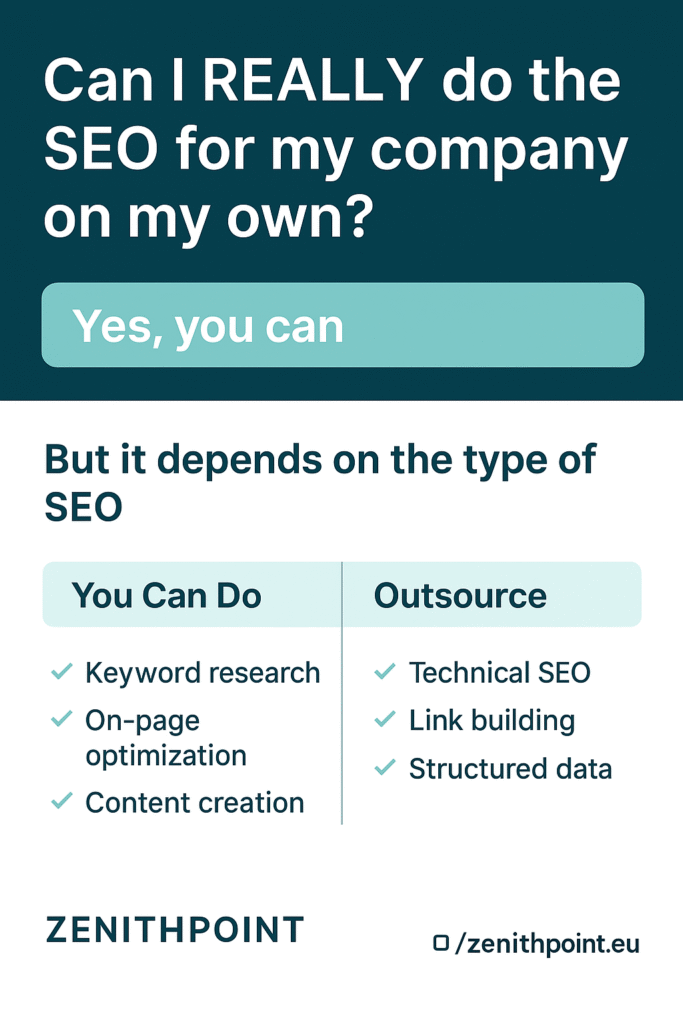
TL;DR Yes, you can absolutely do SEO for your own business — but it depends on your time, budget, and willingness to learn. With the right approach, you can handle keyword research, on-page optimization, and content creation yourself. However, more technical areas like link-building, site performance, and structured data might require expert help. If you want to save time or avoid trial and error, Zenith Point can guide you through every stage of the process. Can You Really Do SEO Yourself? Yes, you can. SEO isn’t locked behind degrees or certifications. It’s an open field that anyone can learn, especially business owners who are ready to invest time into understanding how search engines work. As outlined by Etched Marketing and Fat Stacks Blog, SEO can be approached successfully by individuals without an agency — provided they follow the right steps and stay consistent. However, it’s not a one-size-fits-all situation. Your success depends on your business type, goals, and available time. If you’re running a fast-growing business, outsourcing to professionals like Zenith Point might make more sense. The Core Elements of DIY SEO 1. SEO Strategy Every business already has an SEO strategy — even if it’s accidental. It’s better to make yours intentional. Decide whether you want a content-focused or link-focused strategy: No matter your path, your goal is to rank for terms your audience actually searches for. That’s where keyword research comes in. 2. Keyword Research Keyword research determines whether your content gets seen. Bloggers and content creators often do this themselves, while small business owners sometimes outsource it. Tips for effective keyword research: If you’re curious about how much professional SEO might cost, check out Zenith Point’s SEO pricing guide. 3. Content Production Google ranks pages, not websites — and every page needs strong content. If you’re doing SEO yourself, focus on creating: When you can’t keep up with writing, you can hire freelance writers or agencies to produce optimized content while you oversee the strategy. 4. On-Page SEO Basics This is where a bit of technical knowledge helps. The essentials include: If you need help setting up or troubleshooting, Zenith Point’s web design services include technical SEO support. 5. Link Building Link building can be approached in three main ways: While proactive outreach can deliver faster results, it requires patience and communication skills. Passive strategies, though slower, are safer and more sustainable long-term. For inspiration on effective linkable content, check Zenith Point’s case studies. 6. Structured Data and Schema Markup Structured data is a small but powerful part of on-page SEO. It helps search engines better understand your pages and can lead to rich snippets (like star ratings or FAQs) in search results. What Is Structured Data? Structured data is a code snippet you add to your site to describe your content. It tells Google, “This page is a product,” or “This article is a how-to.” Most webmasters use schema.org vocabulary, supported by all major search engines. Common Types of Structured Data Adding schema doesn’t guarantee a ranking boost, but it improves clarity and click-through rates. How to Add Structured Data For deeper guidance, read the section on Structured Data in Zenith Point’s SEO resources. When to Hire SEO Help If you find yourself overwhelmed by the technical setup, analytics, or content scaling, it’s perfectly fine to bring in experts. SEO is time-intensive, and doing it alone can slow your growth if you’re juggling multiple business tasks. Partnering with an experienced team like Zenith Point lets you focus on running your business while we handle technical audits, content optimization, and strategy execution. FAQ: Can I REALLY Do the SEO for My Company on My Own? Do I need an SEO degree or certification? No. SEO is unregulated and open to anyone. With reliable sources and consistent practice, you can learn everything you need. What’s the hardest part of doing SEO myself? Usually link-building and technical setup. Keyword research and writing are easier to grasp but still require patience. How long does it take to see results? It depends on competition and consistency. Most small businesses start seeing organic improvements within 3–6 months. Can I do SEO if I’m not technical? Yes. Tools and plugins make it easier than ever to handle SEO basics. For more complex technical issues, hiring help can save you hours. Is it cheaper to do SEO myself? Short-term, yes. Long-term, mistakes can cost you time and rankings. A balanced approach — DIY with professional guidance — often works best. How Zenith Point Can Help At Zenith Point, we help businesses grow with smart, scalable SEO strategies. Whether you’re optimizing your own content, improving site speed, or setting up schema markup, our team offers tailored solutions to fit your goals. From custom web design to social media marketing and SEO optimization, we build digital systems that attract and retain customers — not just clicks. Ready to make SEO work for you? Let’s talk.

Can I REALLY Do the SEO for My Company on My Own? Read More »