
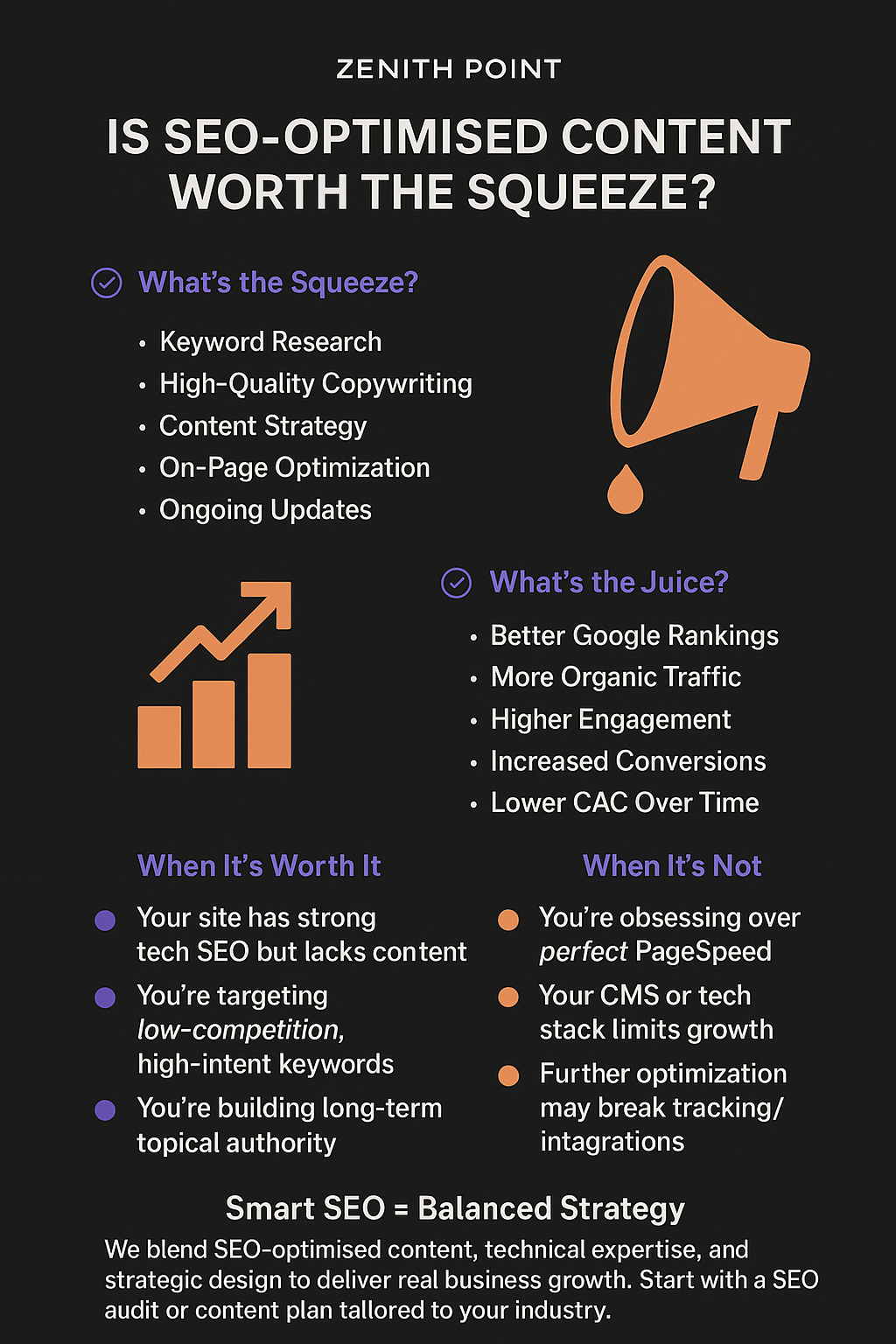
Short answer: Absolutely, but only if you handle the squeeze the right way.
Quick Take
Putting your articles through the SEO filtering process is still a smart move. When you prioritize usefulness, plan strategically, and keep everything in balance, the payoff shows up. Wild keyword stuffing and a panic over pixel-perfect PageSpeed numbers wont hold water over the long haul.
If you want steady rankings, better conversions, and a site that actually pulls its weight for your brand, stick around.
What Is SEO-Optimised Content, Anyway?
SEO-optimised content is writing thats been tuned to appear in search results because it matches what real human beings are typing into that little query box.
Getting there usually means:
- Running solid keyword research
- Matching your message to the intent behind those search terms
- Organizing the piece well and using good internal links
- Handling the nerdy bits, like mobile friendliness and fast load times
The kicker? All those technical gears are pointless if the reader doesnt feel they gained something meaningful the instant they land on your page.
Is the Juice Worth the Squeeze?
Marketers love to ask this, and the reply is a firm yes-on one condition: you squeeze the right fruit. Rushing headlong into tactics without a map simply wastes time.
Stop Obsessing Over PageSpeed First
Speed is important-dont let anyone tell you otherwise-yet it isnt the only trophy on the shelf. Balance it with content mastery, clear intent, and a pleasant user experience. When that mix is right, visitors stick around, and, yes, your load times still shrink.
Google has pretty much dropped the mic on speed. When every other box is checked, a zippy load time tips the odds in your favor.
Huy Nguyen, a speed junkie over at Uplancer, likes to say that PageSpeed is the tie-breaker. Its a heavyweight claim, so Google must mean it.
Mobile-first indexing makes the case even sharper. If the site drags on a phone, visitors bounce before they even notice your dazzling blog posts.
Once the usual tricks are in place-compressing images, kicking in lazy load, wiring up a CDN, tightening the cache-cease the score-chasing. Chasing a perfect Lighthouse number can be a rabbit hole that eats up more time than it saves.
Now flip the question: Does your page deliver honest-to-goodness value? Speed scores mean squat if the content leaves the reader empty-handed.
2Content Is Still King-and Queen, Bishop, and Knight
Quality content is where your ROI will warm its hands. Well-researched, search-intent writing still sits at the head of the table.
Think of it in layers: a how-to that teaches without talking down, a product spec that nudges shoppers to hit buy, maybe even a video or infographic that earns a bookmark.
Add digestible dictionaries and glossaries for good measure. The longer visitors linger, the harder they bond with your brand.
Tools like Ahrefs, SEMrush, or Moz will point you to low-competition keywords no one else has pounced on. Build a topical hub around those phrases to signal authority to both Google and curious readers.
Action tip: Before fingers hit keys, ask yourself the blunt question. What keeps the audience awake at night, and how can you answer it with more clarity than any competitor?
3 Know When to Stop Squeezing
Not every speed tweak is worth the headache it brings. If the next round of optimization breaks analytics, strips chat bubbles, or throttles your ad tracking, hit pause.
That kind of improvement is a diminishing return tacked right to the projects forehead. Sometimes, a reliable site that loads fairly quick and answers real questions is more than good enough.
Nguyen once warned that tweaking too much can snap critical web tools right in half. Suddenly, the grand SEO plan you had looks more like a jigsaw puzzle missing half the pieces.
Instead of chasing speed minutes, think about refreshing old posts, sparking up user experience, or rolling out shiny pages aimed at fresh, high-value keywords.
Balance Speed, UX, and Strategy
A site that zips along but barely says anything? Search engines shrug.
Great articles that drag their feet? Visitors hit back before the first paragraph.
A pretty homepage with zero SEO? Crickets.
The sweet spot sits at:
- Fast enough to stop users from hitting refresh.
- Valuable enough that people link and share.
- Organized enough to nudge folks toward a sale.
SEO-Optimized Content FAQs
Is content more important than PageSpeed for SEO?
Definitely. Speed is only one notch on the ranking ruler, while sharp content that meets visitor needs takes center stage.
What type of SEO content should I create first?
Kick off with blog entries focused on long-tail, low-competition keywords. Theyre easier to rank, draw in links, and quietly build your sites cred.
How can I tell if my content strategy is working?
Keep an eye on page views, bounce rates, time on site, conversion numbers, and where each URL lands in the SERPs. Toss in regular SEO audits to stay honest about what clicks and what flops.
When Should I Stop Page-Speed Tweaks?
Keep crunching milliseconds until the shortcuts start breaking stuff. If your analytics dashboard stops tracking or the shopping cart goes wobbly, hit pause. After that, pour energy into fresh content and a smoother user journey. Speed is important, but it shouldnt hog the entire stage.
How Zenith Point Digital Marketing Can Help
Zenith Point doesnt settle for the low-hanging SEO fruit. Our crew stitches technical tweaks, punchy copy, and eye-catching design into one strong strategy. The goal? Every tweak, text block, and button gets your website a little closer to turning random visitors into real leads.
Final Thoughts
Sprinting for perfect speed is tempting, yet it rarely pays off. SEO is a marathon, not a hundred-yard dash. Balance loading time, readable copy, bold design, and plain old usability if you want the squeeze to matter. In the end, the juice is absolutely worth it.