
TL;DR
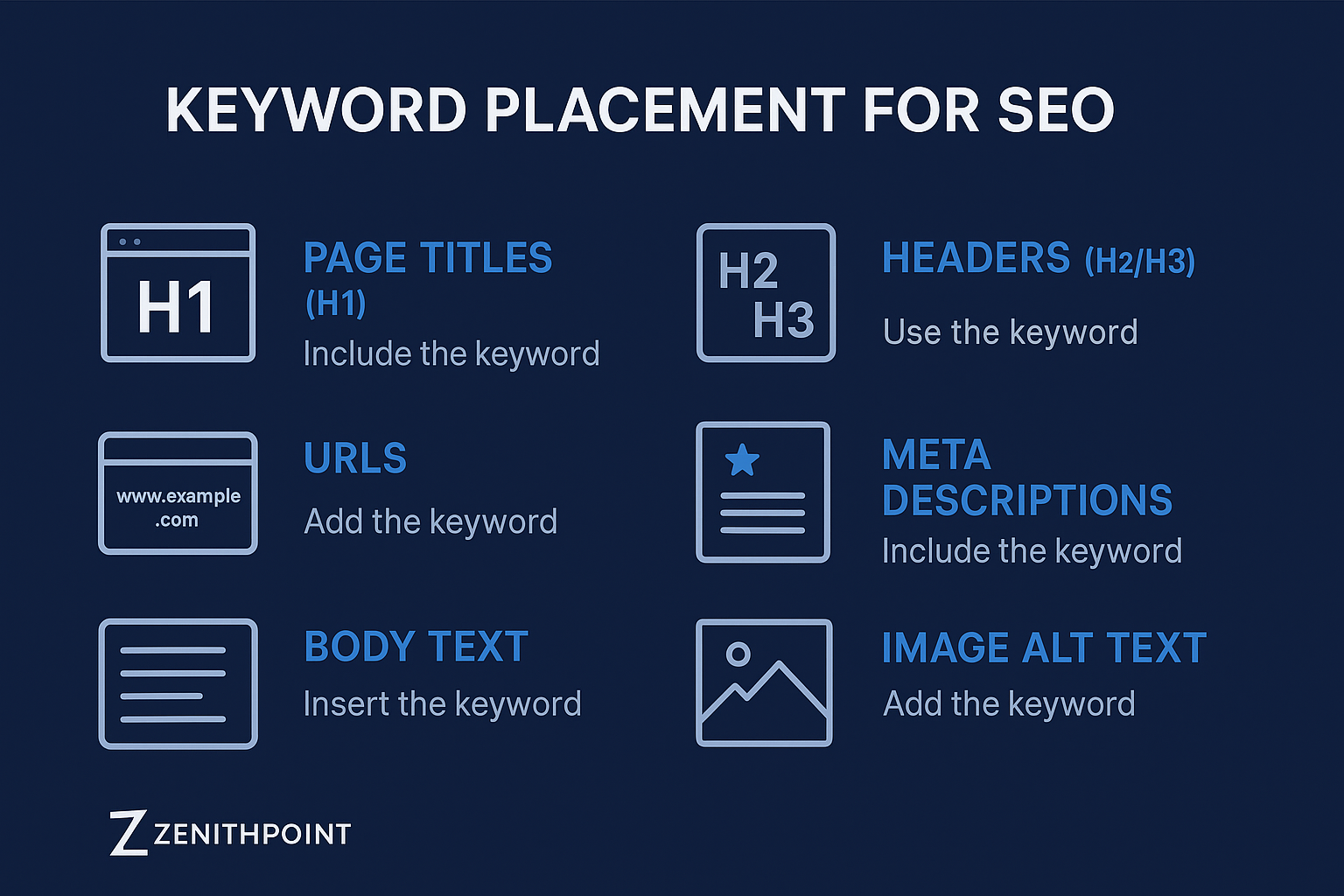
Want people to find your site without paying for ads? Start by tucking keywords into smart spots. Place them in page titles, URLs, and headers (H1 through H3) so both visitors and search engines notice. Drop the main phrase within the first 200 words, then repeat about every 100 words to keep it natural. Don’t skip image ALT tags or the slim meta description; those slots matter, too. If you post videos or podcasts, a quick keyword-heavy summary helps. Finally, keep adding to FAQs or blog posts based on real questions your customers ask. Need a hand? Zenith Point Digital Marketing fine-tunes keyword placement for lasting growth.
Why Keyword Placement Matters
SEO isn’t just a fancy buzzword; it’s a strategy to guide people from Google straight to your door. When someone searches for a service you offer, you’re hoping your exact terms greet them on the first page.
Place those terms where search crawlers look first and you’ll beat the odds. The sad truth is, most folks never scroll past Page 1, and Pages 2 and 3 might as well be blank walls. Getting the layout right can lift your site higher and pull in traffic that’s not paying a dime for ads.
Start With Keyword Research
Grab some search data before anything else. Good words create an unseen pathway linking customers to your homepage. Without solid research, the trail disappears fast.
For a deeper look, check out guides like Using Keywords to Improve Your SEO and Adding Keywords for SEO.
Identify Your Keywords
Solid phrases share a few traits:
- They sound like something your audience would actually say.
- Each term connects directly to what you sell or write about.
- There are enough people searching for the phrase to matter.
- New sites probably won’t crush you because the competition isn’t ruthless yet.
Keywords usually fall into two buckets:
Short-Tail Keywords squat in broad territory. Think running shoes or deck builder. Those terms pull giant search volumes but bring tons of rivals.
Long-Tail Keywords drill down for specifics. Phrases like best shoes for marathon training or affordable deck contractor in Austin get smaller crowds. The upside? They tend to convert well once visitors land on the page.
Tools to Use
Plenty of platforms help, yet most people overthink it. Pick software that lets you:
- Spy on a competitor and see which terms they dominate.
- Note pages that rank but lack backlinks.
- Spot open holes where your site could slide into position smoothly.
If that feels tedious, services such as Zenith Point can hunt for opportunities so you don’t have to.
You can also explore GoDaddy’s guide on finding and adding keywords for more practical tips.
Where to Place Your Keywords
Grab your final list and weave the words through existing copy. Titles, headers, and early paragraphs earn priority. Lean on rhythm, not repetition, so readers never spot the mechanics.
Page Titles and Headline Tags
Every time Google looks at a new web page, the title box—that’s usually the same thing as the H1 tag—shouts loud and clear.
If you’re trying to land jobs as an industrial electrician, for instance, your header could read Industrial Electrician Services in Portland.
The moment a visitor arrives, that line tells them exactly what they’re about to see.
H2 & H3: Subheadings
H2 and H3 tags function like signposts, letting search engines map how your content fits together.
Slipping in related keywords here gives those signposts extra weight.
For example:
H2: Why Choose an Experienced Industrial Electrician
H3: Safety and Compliance in Electrical Installations
URL Slugs
A tidy URL stays short and still manages to name the game.
www.yoursite.com/industrial-electrician sounds straightforward.
www.yoursite.com/page12345 feels like reading a grocery list of cereal brands.
First Paragraph (First 200 Words)
Dropping your main keyword in the opening lines helps Google get the point before it even finishes loading the page.
Body Text
Drop the target phrase naturally once every 100 words or so, then walk away.
If the write-up stretches to 1,000 words, saying best shoes for running eight or nine times still feels human.
Meta Descriptions
Those few lines under your link in a search-result page serve as a free billboard.
Pack one or two keywords inside and phrase it in a way that makes somebody want to click.
Why Alt Text Matters
A search engine can’t peek at a photo but can read the words you tuck inside the Alt tag. Use that space to drop the same keyword visitors might type.
Alt-Text Sample:industrial-electrician-wiring-circuit-panel-0123.jpg reads much smarter than photo123.jpg.
Videos and Podcasts
Google neither sees faces nor hears voices, yet it loves plain text. Write a short summary of every clip you post so crawlers know the topic and feel comfortable indexing.
Skip the Keyword Clog
Stuffing the same keyword into every sentence is like pouring too much salt: it ruins the flavor and likely pushes readers away. A good rule? Use it once, gloss over it, and don’t barely notice.
Write Like You Talk
When the keyword fits naturally, cool. If it sounds stiff, swap in a close synonym or flip the sentence around so the keyword tags along without complaining. Topics come first, rankings follow.
Build the Web with Fresh Pages
New articles, guides, and lists circle back to your focus term faster than any fancy tool. Each fresh post shouts hey, I’ve got more that matches that phrase you just googled.
Long-Tail Up for Grabs
Odds are someone typed best sneakers for long runs on concrete, not running shoes. Repeat questions start popping up? Draft an FAQ page and let those narrower phrases breathe.
Add Blog Posts
Start a fresh blog whenever you’re curious about what customers really want to know. Real questions become useful articles, and useful articles make your site feel alive.
When you dig into those topics, Google tends to notice and rewards you with extra credibility.
Quick Win: Slip secondary terms into the headings, and tuck the main phrase into the opening 200 words where it feels natural.
How Zenith Point Digital Marketing Can Help
Zenith Point specializes in making SEO simple from day one. We hunt down keywords that will truly move the needle for your business, then show you where and how to insert them.
Whether you’re launching a brand-new site or polishing an older one, our data-backed playbook keeps your pages ranking high and converting even higher.
Let our team handle the number-crunching around keywords so that you can spend your energy doing what you love most.
FAQ: Where to Put My Keywords?
Where are the must-have placements?
- Page titles (H1) and slug URLs
- The opening 200 words of the article
- Subheadings like H2s and H3s
- Main text about every one hundred words
- Meta descriptions and image ALT tags
Should I use the same keyword on every page?
Definitely not. Each page should lean on a different keyword set because the focus changes. Repeating one term across multiple links sends mixed signals to search engines.
How Often Do I Use A Keyword?
Shoot for a keyword density around 1 to 2 percent. On a 1,000-word article that usually lands you somewhere near ten mentions.
Are Meta Descriptions Still Important?
They absolutely matter, even if ranking without them is possible. A snappy description can lift click-through rates and help search engines figure you out faster.
Should I Refresh Old Posts With Fresh Keywords?
Yes, yes, yes. Swapping in today’s terms keeps older pages relevant and gives them a shot at climbing the results.
Final Thoughts
Good SEO begins with smart keyword research but winning really hinges on placement. Drop your phrases into titles, sub-headings, and lists, then back them up with clear, helpful writing.
Stick with that plan and watch your visitors stack up. If the road feels bumpy, Zenith Point can map out the next steps.
Ready To Make Your Site Stand Out?
Give Zenith Point Digital Marketing a shout and let’s crank up your online visibility together.