
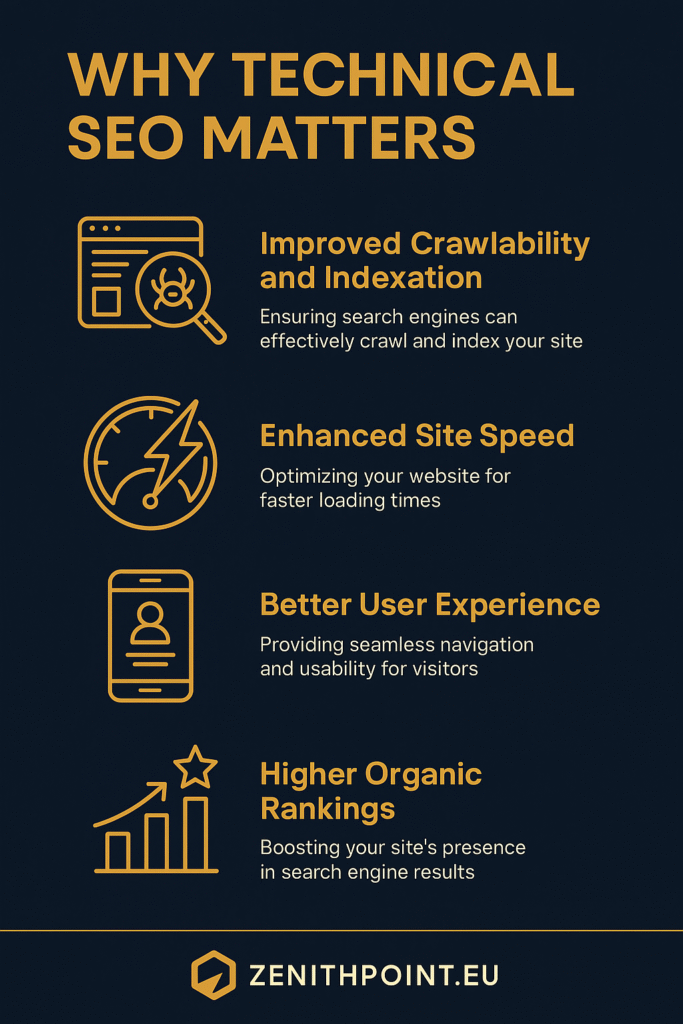
Technical SEO is the hidden backbone of digital marketing. It may not generate the buzz of viral content or influencers, but even the most beautifully designed websites and well-crafted content will not rank without it. If you want your website to rank well on search engines and provide excellent user satisfaction, it is vital to focus on technical SEO.
We will define technical SEO, explain its importance, outline relevant factors, and explain strategies for proper site optimization in this post.
Synopsis
For effective site crawling and indexing, as well as for ensuring speed, mobile access, and security, technical SEO is critical. It impacts both visibility on the search engine and user experience. Compliance with the site structure, page load speed, mobile usability, and other parameters facilitates better ranking and higher conversion rates.
What Is Technical SEO?
Technical SEO is defined as the optimizations performed at the backend of a website in order to improve its search engine’s ability to crawl and index the content. It is the cornerstone of all other SEO activities.
While content and backlinks help drive authority, technical SEO ensures your site is easy to reach, comprehend, and navigate. If your website is not technically competent, Google won’t be able to reach, access, or rank your content accurately.
What Is the Purpose of Technical SEO?
Technical SEO focuses on issues such as:
- Site speed
- Mobile optimization
- HTTPS security certificates
- User engagement metrics
Search engines deploy bots to crawl through your site. If the bots encounter issues—like slow loading, blocked access, or confusing structures—your ranking will suffer.
Here’s how technical SEO affects your site:
- Ability to be crawled and indexed
- Site load speed
- Mobile optimization
- HTTPS security certificates
- User engagement metrics
Without technical SEO, your website will:
- Be undetectable by most search engines
- Infuriate users with slow load speeds
- Display poorly on mobile devices
- Be flagged as insecure by browsers and tools
That’s why addressing technical SEO needs to be prioritized during website design and development.
Key Technical SEO Elements You Should Optimize
1. XML Sitemap
Helping search engines comprehend the structure of a website, an XML sitemap lists URLs to ease the crawling process. Sitemaps can be submitted through Google Search Console and Bing Webmaster Tools for improved indexing.
2. robots.txt File
This file notifies search engines which sections of your website they are restricted from crawling. Use it to block admin folders or plugin directories.
User-agent: *
Disallow: /wp-admin/
3. Head Tags for Indexing and Canonicalization
Use meta tags in your <head> section to:
- Prevent indexing of certain pages (noindex)
- Avoid duplicate content issues with canonical tags
<meta name="robots" content="noindex">
<link rel="canonical" href="https://example.com/original-page/" />
4. Information Architecture (IA)
A well-structured IA includes:
- Clear navigation
- Logical internal linking
- Use of breadcrumbs
- Descriptive and clean URLs
This improves crawlability and user navigation.
5. Fix Broken Pages
Broken pages (404 errors) damage trust and user experience. You should:
- Set up 301 redirects when removing or renaming pages
- Guide users to alternative content to retain SEO value
6. Mobile Responsiveness
Most users browse on mobile. Test your site using simulators and fix issues like:
- Small text
- Overlapping elements
- Poor layout scaling
7. Page Loading Speed
Sites that load slowly experience higher bounce rates. To improve speed:
- Optimize and compress images
- Enable lazy loading
- Use caching, CDN, and minified CSS/JavaScript
- Reduce the number of redirects
Use Google PageSpeed Insights for customized suggestions.
8. Site Security
Secure websites improve user trust and search ranking. Ensure:
- Your site uses HTTPS
- Outdated APIs are avoided
- Content Security Policy (CSP) headers are implemented
9. Accessibility
Enhancing accessibility improves the user experience for everyone. Check:
- Sufficient color contrast
- Correct HTML/ARIA labels
- Screen reader support
- Keyboard navigability
Audit your site with Google PageSpeed Insights or WAVE.
FAQ: How Important Is Technical SEO?
What happens if I ignore technical SEO?
You’ll likely face poor visibility in search results, low user interaction, and high bounce rates. Your content may not even be indexed by Google.
Is technical SEO a one-off job?
No. Websites require frequent audits and updates since they are dynamic, and so are search engine algorithms.
Can I just work on the content?
Great content can help, but without a solid technical SEO foundation, it won’t rank or perform well in search.
How long does it take to see results from technical SEO?
You can expect improved crawling and indexing within weeks. Ranking improvements take longer but are much more sustainable.
How Zenith Point Digital Marketing Can Assist You
At Zenith Point, we focus on more than great content and branding. We take care of the technical SEO that makes websites thrive.
From fixing crawl issues to improving mobile performance and site speed, we’re here to fully optimize your website—or help launch one with solid technical foundations.
📈 Want to ensure your site is running on all cylinders?
👉 Contact us today or learn more about our Technical SEO Services.